

Late fall can be a good time to buy a house in Michigan. The leaves are coming down, temperatures are dropping, and homeowners are getting their properties ready for winter. For buyers, this time of year offers an opportunity to evaluate how a home is maintained before snow and freezing temperatures make certain conditions harder to inspect.
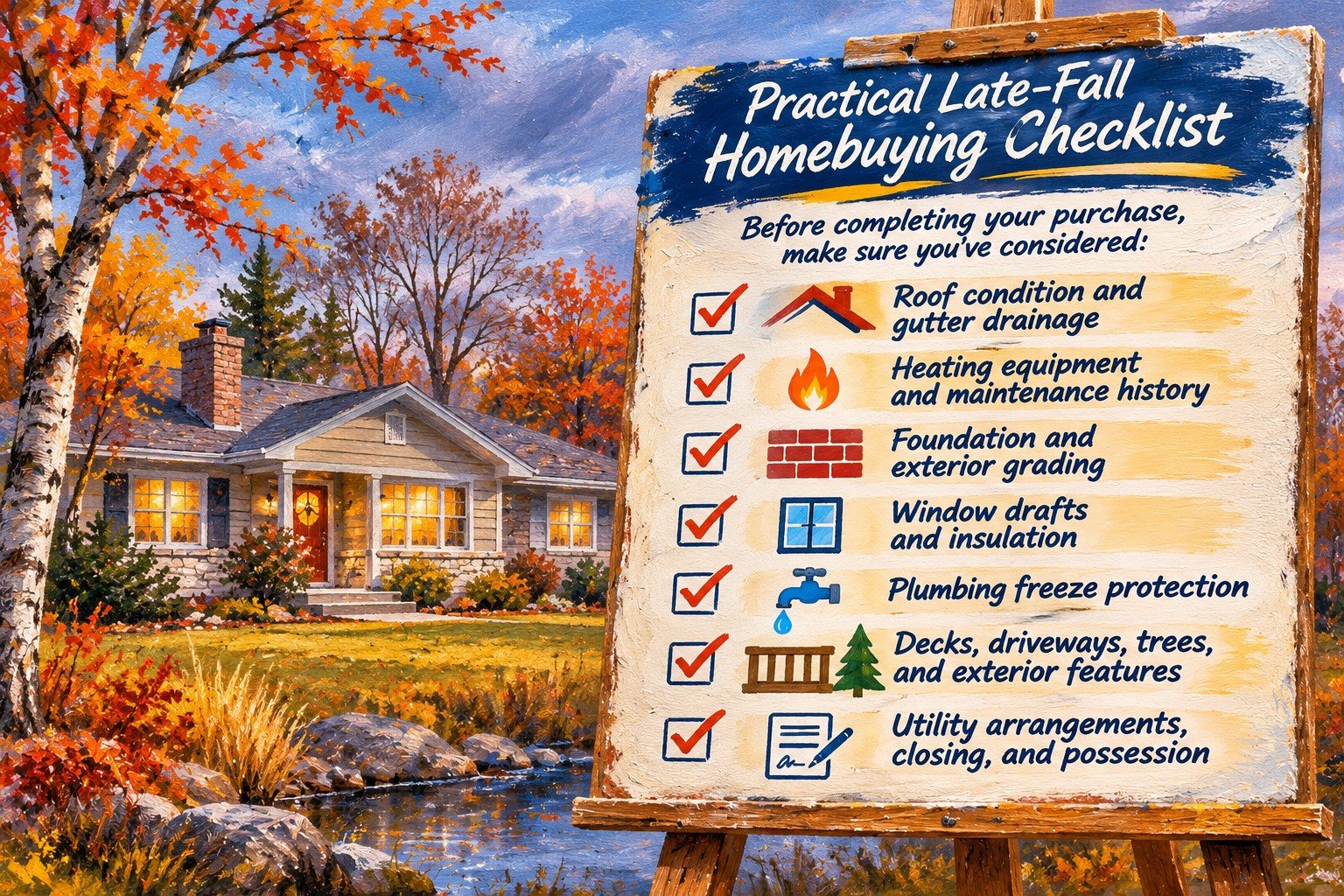
A house may look great during a showing, but there are important details worth checking before closing. Here are seven areas Michigan buyers should pay attention to when purchasing a home in late fall.
1. Roof, Gutters, and Drainage
By November, many trees have dropped their leaves. This makes it easier to see rooflines and certain exterior features, but fallen leaves can also clog gutters and downspouts.
During a showing or inspection, look for:
Missing, curling, or damaged shingles
Gutters filled with leaves or debris
Downspouts discharging water near the foundation
Water stains beneath roof overhangs
Damaged flashing around chimneys and roof penetrations
Ask about the roof's age and any previous repairs. An inspector can examine accessible roofing components, while a roofing contractor may be appropriate if there are signs of damage.
For more information about roofing materials, flashing, ventilation, and warning signs, read Home Roofing Basics.
Gutters and downspouts also deserve attention. Our Gutters and Drainage Basics guide explains how these systems help move water away from the house.
2. Heating System Performance
Late fall is a practical time to evaluate a home's heating system because the furnace or boiler is likely being used regularly.
Pay attention to how the home feels during your showing. Are certain rooms noticeably colder? Does the heating system make unusual noises? Is the thermostat working properly?
During the inspection, consider:
Furnace or boiler age
Maintenance and service history
Condition of accessible ductwork or piping
Airflow and heat distribution
Visible corrosion, leaks, or damaged components
Proper operation of the heating equipment
A qualified HVAC contractor can provide additional evaluation when concerns arise.
Air conditioning equipment may not be suitable for testing when outdoor temperatures are too low. Manufacturer operating limits should be followed, and any inspection limitations should be documented.
Our Home Heating and Cooling Basics guide explains furnaces, boilers, heat pumps, air conditioners, and what buyers should know about equipment condition.
3. Foundation, Grading, and Water Management
Late fall often provides an opportunity to inspect exterior grading before the ground is covered with snow.
Walk around the property and observe how the land slopes near the house. Water should generally be directed away from the foundation through appropriate grading and drainage.
Look for:
Low areas where water may collect
Soil sloping toward the foundation
Cracks or previous repairs in visible foundation walls
Downspouts ending too close to the house
Standing water near patios, walkways, or basement windows
Water stains or mineral deposits inside the basement
Ask whether the property has experienced water intrusion during heavy rain or spring snowmelt.
If the home has a sump pump, learn where the discharge line runs and whether it has experienced freezing problems.
To better understand different foundation types and common concerns, see Home Foundation Basics.
4. Windows, Doors, and Insulation
As outdoor temperatures fall, buyers may begin noticing drafts and uneven indoor temperatures.
Check around exterior doors and windows for damaged weatherstripping, visible gaps, and difficult operation. Look for condensation between insulated glass panes, which can indicate a failed window seal.
An inspection may also identify accessible attic insulation, ventilation concerns, and visible air leaks.
These details matter because a home that feels comfortable in October may perform differently during January's colder temperatures.
For a closer look at window materials, energy efficiency, and common problems, visit Home Window Basics.
Our Home Wall Basics article also explains insulation, air sealing, and what is typically found behind exterior walls.
5. Plumbing and Freeze Protection
Michigan's freezing temperatures can damage plumbing, particularly in unheated or poorly insulated areas.
During the inspection, pay attention to exposed pipes in crawl spaces, garages, basements, and near exterior walls.
Important items include:
Water lines in vulnerable locations
Pipe insulation and protection from cold air
Exterior hose connections
Plumbing leaks or previous repairs
Location of the main water shutoff valve
Heating arrangements for vacant properties
Outdoor hoses should be disconnected before freezing weather. Depending on the plumbing system, exterior faucets may also require shutting off and draining.
If the property is vacant, ask how the seller is maintaining heat and protecting the plumbing until closing.
For an explanation of water supply pipes, drains, water heaters, and common plumbing concerns, see Home Plumbing Basics.
6. Decks, Driveways, Trees, and Exterior Features
One advantage of buying in late fall is that many exterior features are still visible before snow covers the property.
Take time to examine the condition of:
Deck boards, railings, stairs, and visible supports
Driveways, sidewalks, and retaining walls
Fences and gates
Trees with dead or damaged branches
Exterior steps and handrails
Yard drainage and low areas
Leaves may conceal damaged pavement or uneven walkways. Fallen branches and dead trees can also create problems during winter storms.
For rural properties, consider access roads, long driveways, and snow removal arrangements. A driveway that looks manageable in November may require significant maintenance during winter.
For a broader explanation of what inspectors evaluate and when specialized inspections may be useful, read Home Inspection Basics.
7. Closing, Utilities, and Winter Preparation
A late-fall purchase may close during December or January, making the transition between owners especially important.
Before closing, buyers should understand the agreed possession date and how the property will be maintained until possession transfers.
Important questions include:
Will the heat remain on until possession?
Who is responsible for utilities during any occupancy period after closing?
Have agreed repairs been completed?
Is the property properly insured during the transition?
Are there any new leaks, damage, or maintenance concerns?
When will the buyer take responsibility for snow and ice removal?
The final walkthrough provides an opportunity to check the property's condition and verify agreed repairs, consistent with the purchase agreement.
Our Final Walkthrough: Is the House in the Same Condition? guide explains what buyers should look for shortly before closing.
If the seller will remain in the property after closing, the occupancy agreement should clearly address responsibilities and expectations.
Final Thoughts
Buying a home in late fall offers some useful advantages. Colder temperatures can reveal heating and insulation concerns, while many exterior features remain visible before snow arrives.
A thorough inspection and clear understanding of the property's condition can help buyers prepare for their first Michigan winter in their new home.
For additional guidance on buying and selling property in Southeast Michigan, explore the SoldByCaleb Real Estate Guides.