
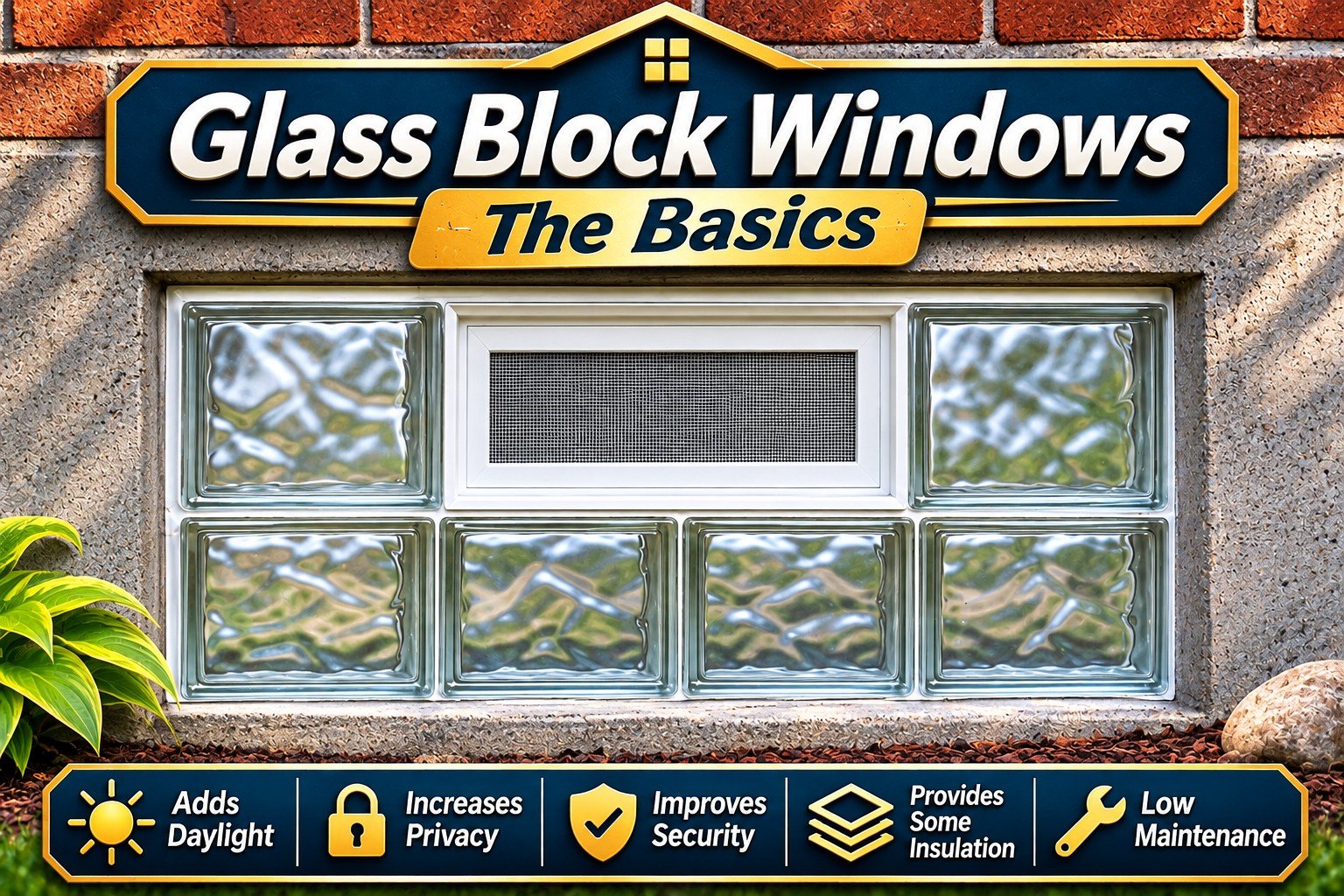
Glass block windows are common in Michigan basements, especially in older homes. They're often installed to replace rusted steel windows or deteriorating wooden frames.
They let daylight in, provide privacy, and require little maintenance.
How Glass Block Windows Work
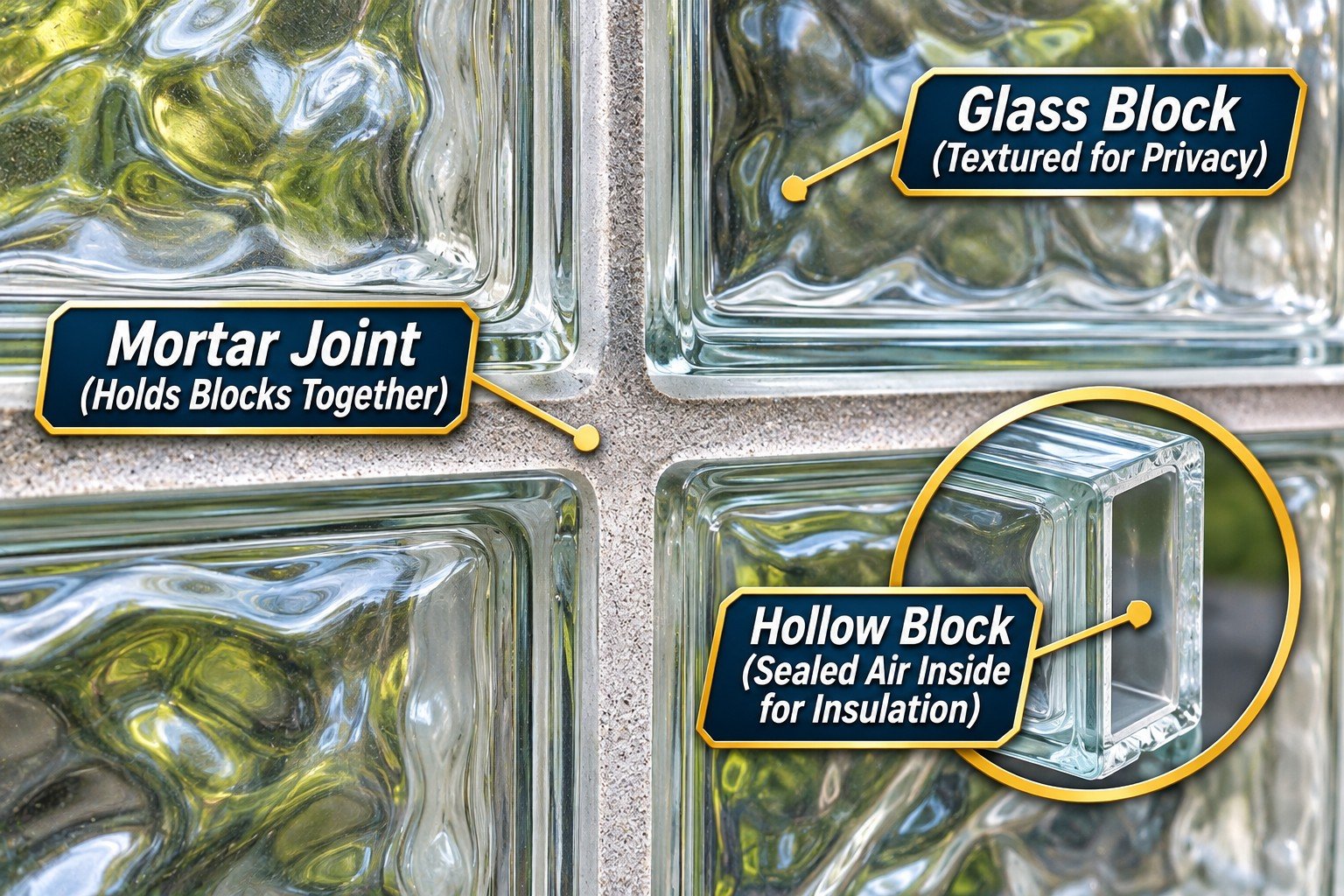
Most residential glass blocks are hollow, with sealed air inside. Individual blocks are assembled into a panel using mortar or a specialized installation system.
Privacy: Textured glass limits visibility from outside.
Security: Fixed panels have no sash or latch to force open.
Insulation: Sealed blocks provide some thermal resistance.
Durability: Glass won't rot or rust.
Fixed Windows vs. Ventilated Windows
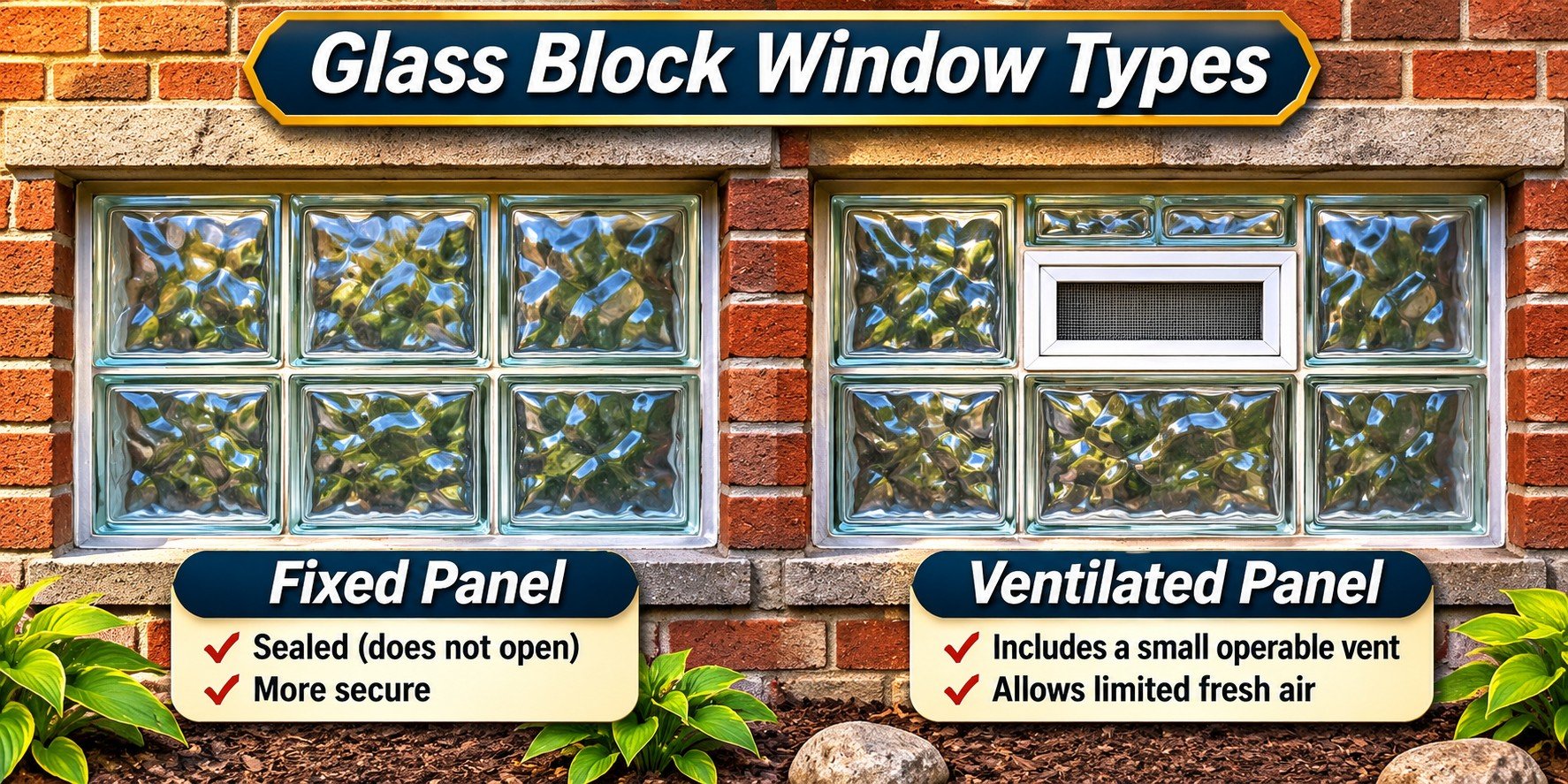
Most glass block panels are permanently closed. Some include a small operable vent with a screen.
A vent allows some fresh air into the basement, but it provides much less airflow than a full-sized opening window.
Installation and Common Problems
Glass block windows are often assembled into prefabricated panels and installed in existing basement openings.
The old frame is removed, the opening is prepared, and the new panel is secured and sealed.
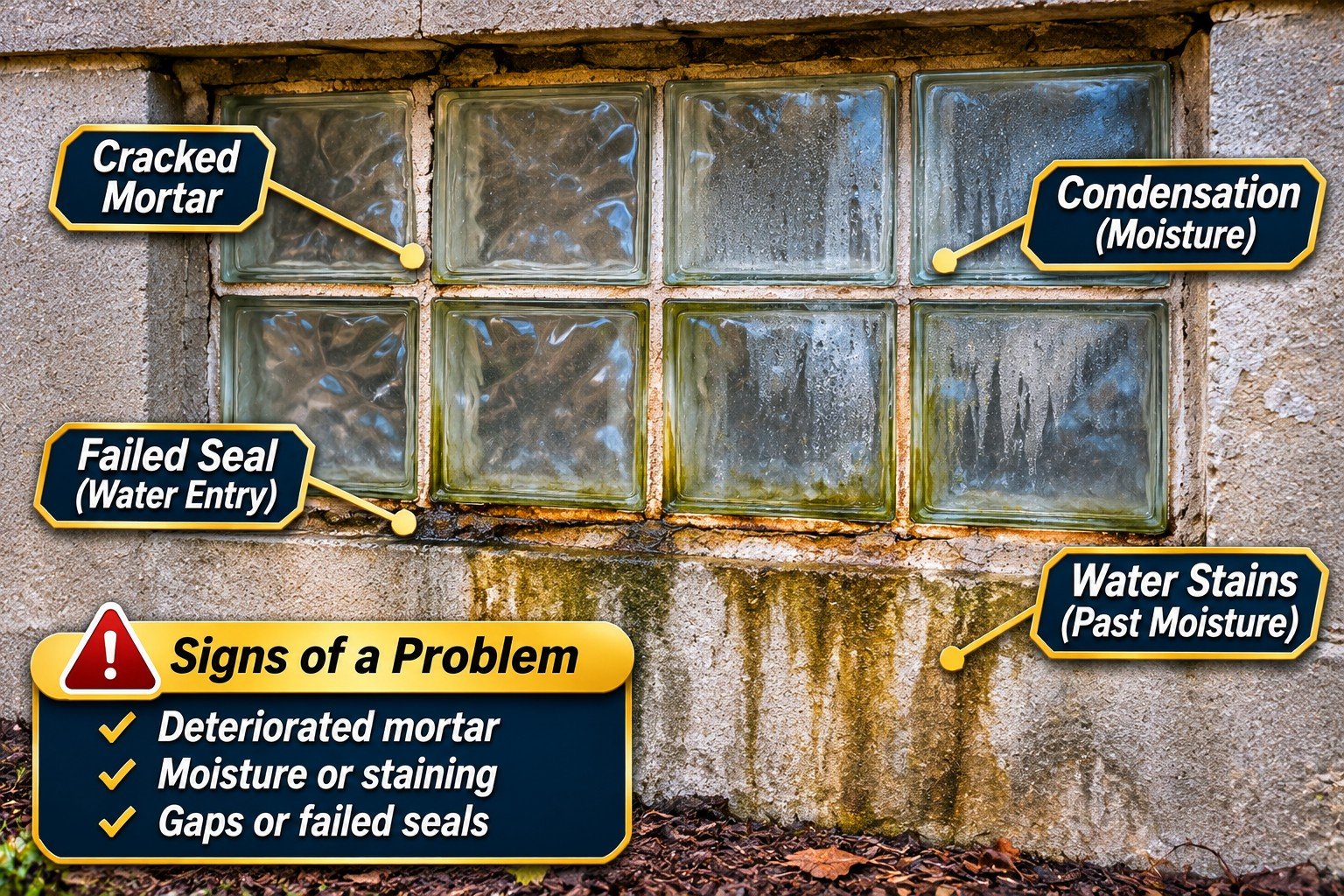
Common problems include:
Cracked glass blocks
Deteriorating mortar joints
Failed seals around the frame
Water entering around the foundation opening
Broken or stuck ventilation inserts
What Should Buyers Check?
During a showing or inspection, look at the condition of the blocks, mortar, and surrounding foundation.
Check for water stains below the window, damaged vents, and exterior drainage problems. A properly installed glass block window can last for decades.
What Buyers and Homeowners should know
Glass block windows are a durable, low-maintenance option for Michigan basements. Their biggest advantages are privacy and security, while their main limitations are ventilation and emergency escape.
For buyers, the important things are installation quality, water resistance, and whether the window fits the intended use of the basement.