
Home Inspection Basics: What Does a Home Inspection Really Tell You?
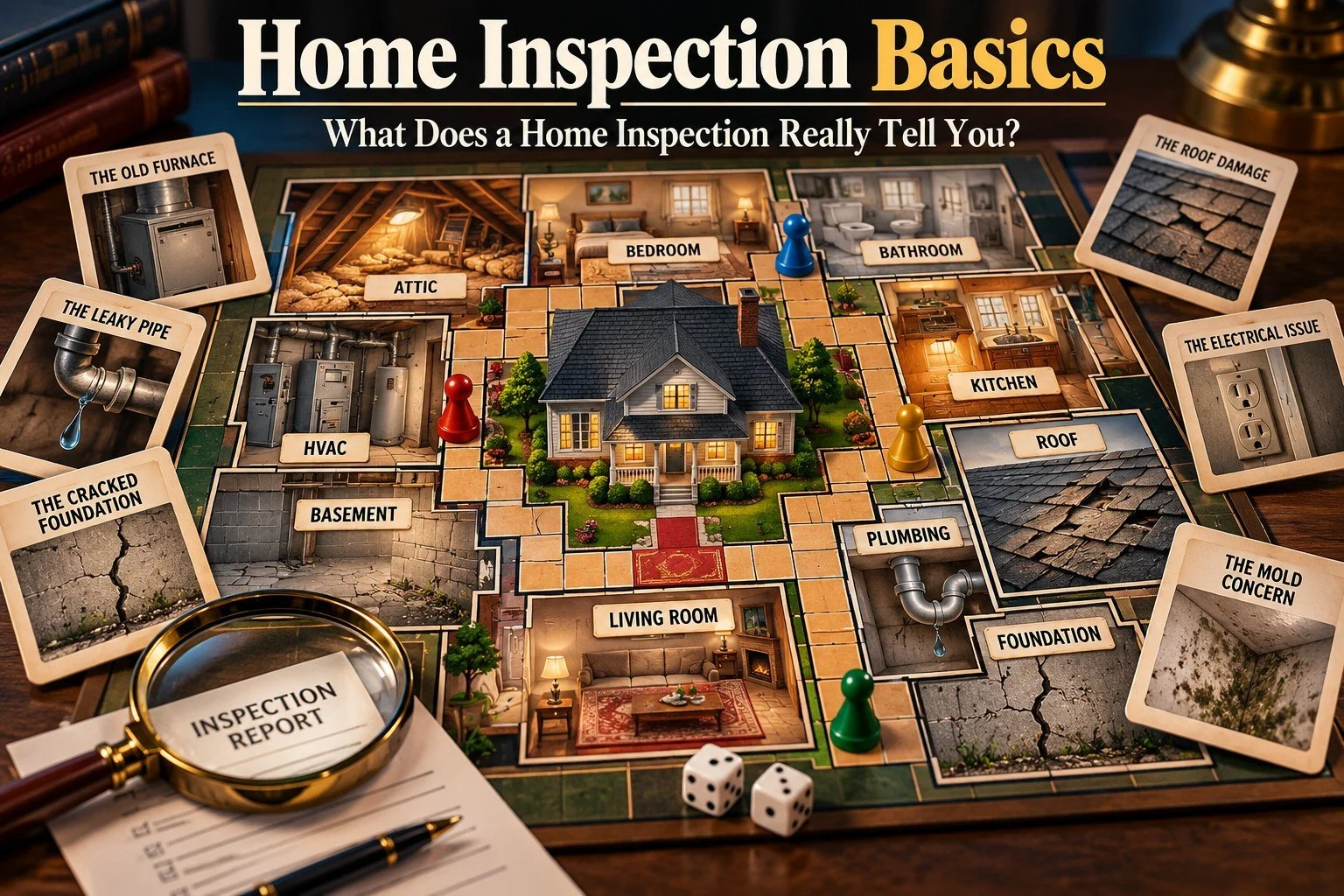
A home can look beautiful on the surface, but what about the systems and components you don't notice during a showing?
A home inspection helps buyers, sellers, and homeowners better understand a property's condition. It can identify visible problems, highlight maintenance needs, and reveal concerns that deserve further investigation.
Here are seven things worth understanding about the home inspection process.
1. What Is a Home Inspection?
A home inspection is a visual examination of a property's accessible systems and components, typically performed by a professional home inspector.
Buyers commonly schedule inspections after an offer is accepted, but sellers may arrange an inspection before listing, and homeowners can request one to evaluate their property's condition.
The goal is to identify visible defects, safety concerns, maintenance needs, and conditions that may require additional evaluation.
A home inspection is not a warranty, a guarantee against future problems, or a comprehensive evaluation of every concealed component.
2. What Does a Home Inspector Check?
A general home inspection typically includes an evaluation of accessible areas and major systems.
Roof: Visible roofing materials, flashing, drainage, and signs of deterioration.
Foundation and Structure: Visible cracks, movement, moisture concerns, and structural components.
Electrical: Accessible panels, outlets, switches, wiring, and visible safety concerns.
Plumbing: Fixtures, visible supply and drain piping, water heaters, and evidence of leaks.
Heating and Cooling: Furnaces, air conditioning equipment, thermostats, and accessible distribution systems.
Attic and Insulation: Accessible insulation, ventilation, moisture, and visible roof framing.
Basement and Crawl Space: Accessible structural components, moisture intrusion, and other visible conditions.
Interior and Exterior: Windows, doors, stairs, siding, grading, and other accessible features.
Inspectors generally do not open finished walls, move heavy furniture, or dismantle equipment to investigate concealed conditions.
3. What Isn't Included in a Standard Inspection?
A general home inspection does not necessarily cover every possible concern.
Some evaluations require specialized equipment, additional training, or separate services.
Examples include:
Sewer Camera Inspection: Evaluates the inside of a sewer line for blockages, roots, deterioration, or damage.
Radon Testing: Measures radon gas levels inside the home.
Mold Testing: May involve sampling or laboratory analysis when warranted.
Pest Inspection: Evaluates evidence of termites or other wood-destroying organisms.
Well and Septic Inspection: Evaluates private water and wastewater systems.
Environmental Testing: May include testing for lead, asbestos, or other substances.
The services included depend on the inspector and the inspection agreement.
For a closer look at one commonly overlooked system, read Getting Ready to Buy a Home? Don't Overlook the Sewer Line
4. What Happens During a Home Inspection?
A typical inspection of a single-family home may take approximately two to four hours, depending on the property's size, age, condition, and complexity.
The inspector examines accessible systems, documents observations, and identifies concerns.
Buyers are often encouraged to attend at least part of the inspection so they can ask questions and better understand the findings.
Afterward, the inspector provides a written report, usually including descriptions, photographs, and recommendations.
An inspection report is not simply a pass or fail grade. It is information about the property's observed condition at the time of inspection.
5. How Do You Understand the Inspection Report?
Inspection reports often contain numerous observations, including items that are common in older homes.
Not every finding represents a major problem.
It helps to separate concerns into practical categories.
Routine Maintenance: Minor repairs, adjustments, or regular upkeep.
Aging Components: Equipment or materials approaching the end of their expected service life.
Safety Concerns: Conditions that may create an electrical, fire, structural, or other safety hazard.
Significant Defects: Problems that may require substantial repair or replacement.
Further Evaluation: Conditions requiring assessment by a qualified specialist.
An older furnace that operates properly is different from a furnace that is unsafe or no longer functions.
Likewise, a small cosmetic crack is not necessarily evidence of a structural problem.
When a finding is unclear, additional evaluation can help determine its significance and possible repair costs.
6. What Happens When Problems Are Found?
Finding problems during an inspection does not automatically mean the transaction must end.
Depending on the purchase agreement, inspection contingency, and findings, buyers and sellers may consider several options.
The buyer accepts the property's condition.
The seller agrees to complete certain repairs.
Both parties negotiate an allowable financial concession.
The purchase price is adjusted by agreement.
A specialist evaluates a concern before a decision is made.
The transaction is terminated when permitted by the contract.
The purchase agreement determines each party's rights, obligations, and deadlines. A seller is not automatically required to repair every inspection finding.
An as is sale also does not necessarily eliminate inspection rights or applicable disclosure obligations.
Learn more in What Does “As Is” Really Mean in a Michigan Home Sale?.
7. How Should Buyers and Sellers Prepare?
For Buyers
Choose a qualified inspector, understand the inspection contingency and its deadlines, and allow enough time for any additional evaluations.
Review the findings carefully and ask questions about significant concerns before making decisions.
For Sellers
Make major systems and accessible areas available for inspection. Provide access to the electrical panel, furnace, water heater, attic, and other relevant components when practical.
Address known issues when appropriate and keep maintenance records, warranties, and repair documentation available.
For Homeowners
You don't have to be buying or selling to benefit from an inspection. A periodic evaluation can help identify maintenance needs and provide a better understanding of your property's condition.
What Matters Most
A home inspection is a tool for understanding a property, not a guarantee of perfection.
The most useful question isn't whether an inspection finds problems. Most homes have some maintenance needs or imperfections.
The important questions are what the findings mean, what they may cost to address, and how they affect your decisions.
Whether you're buying, selling, or maintaining your home, understanding its condition helps you move forward with greater confidence.