
Home Heating and Cooling Basics: Understanding Your Home's Comfort Systems.
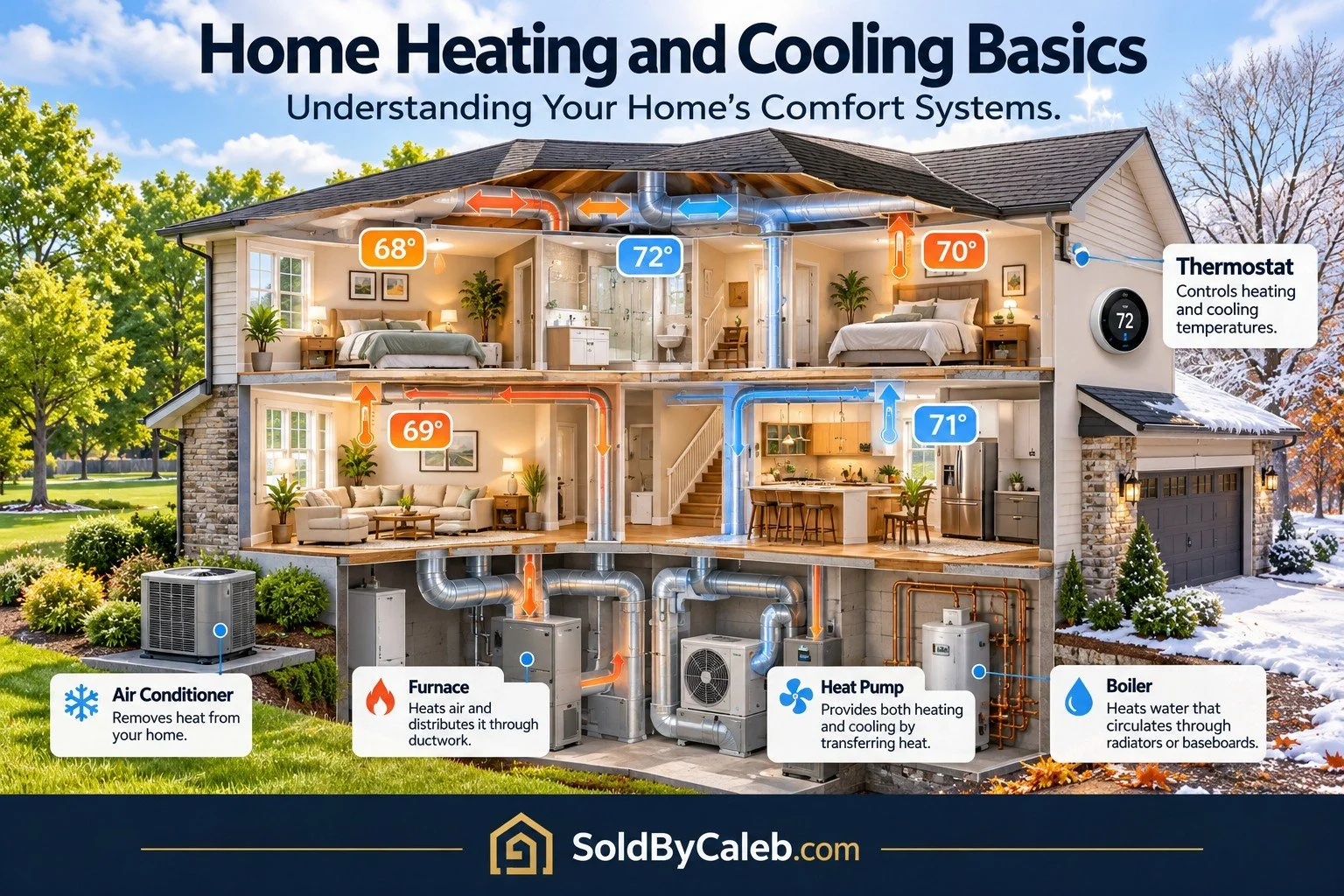
Your home's heating and cooling equipment does more than control the temperature. It affects comfort, energy costs, maintenance, and potentially the expenses you'll face after buying a home.
Whether you're buying, selling, or maintaining a home, understanding the basics can help you make better decisions.
1. Know the Different Types of Systems
Not every home heats and cools the same way.
Forced Air Furnace: Heats air and distributes it through ductwork. Natural gas furnaces are common in Michigan.
Boiler: Heats water that circulates through radiators or baseboard heating systems.
Central Air Conditioning: Removes heat from indoor air, typically using an outdoor condenser and an indoor cooling coil.
Heat Pump: Transfers heat rather than generating it through combustion. Many models provide both heating and cooling.
Ductless Mini Split: Provides heating and cooling to individual rooms or zones without traditional ductwork.
Some homes use combinations of these systems. For example, a home might have a gas furnace and central air conditioning, or a heat pump paired with a backup furnace.
2. Understand Equipment Age and Condition
Heating and cooling equipment doesn't last forever, but age alone doesn't determine when replacement is necessary.
ENERGY STAR recommends considering a professional evaluation when air conditioners or heat pumps are more than 10 years old, or furnaces and boilers are more than 15 years old.
A properly maintained older system may still work well. A newer system with installation problems can perform poorly.
Look for service records, unusual noises, frequent repairs, uneven temperatures, and evidence of leaks or corrosion.
3. Efficiency Matters, but So Does Installation
Heating and cooling efficiency is measured differently depending on the equipment.
AFUE: Measures fuel efficiency for furnaces and boilers.
SEER2: Measures seasonal cooling efficiency.
HSPF2: Measures heating efficiency for air source heat pumps.
Higher efficiency can reduce operating costs, but actual savings depend on energy prices, insulation, equipment sizing, installation, and how the home is used.
A larger system isn't automatically better. Oversized equipment can cycle frequently and create comfort or humidity problems.
Learn more from ENERGY STAR's heating and cooling guidance.
4. Michigan Winters Require Special Consideration
In Michigan, reliable heating is particularly important.
Modern cold climate heat pumps can operate in freezing temperatures, but the correct equipment and backup strategy depend on the home.
Before replacing a furnace or installing a heat pump, ask a qualified contractor to evaluate the home's heating requirements, ductwork, insulation, and electrical capacity.
5. Simple Maintenance Can Prevent Expensive Problems
Regular maintenance helps heating and cooling systems operate efficiently.
A practical checklist includes:
Check air filters monthly and replace or clean them as needed.
Schedule professional heating maintenance before winter.
Schedule cooling maintenance before summer.
Keep outdoor equipment clear of leaves, vegetation, and snow.
Watch for water around equipment, unusual sounds, or unexpected changes in utility bills.
Maintain working carbon monoxide alarms where fuel burning equipment is present.
For a more detailed checklist, visit ENERGY STAR's HVAC maintenance guide.
6. What Should Homebuyers Check?
When touring a property, identify the type of heating and cooling system and ask about its age and maintenance history.
During your inspection period, consider these questions:
Does the heating system operate properly?
Is central air conditioning installed, and does it work?
Are there noticeable temperature differences between rooms?
Are there maintenance records or transferable warranties?
Is further evaluation by a licensed HVAC contractor appropriate?
A general home inspection can identify visible concerns, but it isn't a substitute for a detailed HVAC evaluation when problems are suspected.
7. Should You Replace Equipment Before Selling?
Not necessarily.
A functioning older furnace or air conditioner doesn't automatically need replacement before listing a home.
Sometimes servicing the equipment, correcting an identifiable problem, and providing maintenance records make more sense than investing thousands of dollars in a new system.
If replacement is necessary, evaluate the cost against the property's condition, expected market value, and likely buyer concerns.
What Matters Most
The best heating and cooling system is one that's properly sized, safely installed, maintained, and appropriate for the home.
Before purchasing a property or investing in major equipment, understand what you already have and what improvements would accomplish.