
Home Roofing Basics: What Every Homeowner Should Know
Your roof is one of the most important parts of your home, yet most homeowners don't give it much thought until something goes wrong.
A roof does much more than keep rain out. It protects the structure, helps manage moisture, and plays a role in your home's energy efficiency.
Whether you're buying a home, preparing to sell, or maintaining the one you already own, understanding a few roofing basics can help you avoid expensive surprises.
1. Your Roof Is More Than Shingles
When people talk about replacing a roof, they're usually referring to the shingles. But shingles are only one part of a complete roofing system.
Here are the main components:
Roof decking: The plywood, OSB, or wood boards attached to the roof framing. This provides the surface that supports the roofing materials.
Underlayment: A protective layer installed between the decking and shingles that provides secondary protection against moisture.
Ice and water shield: A self-adhering waterproof membrane commonly installed along roof edges, valleys, and other vulnerable areas.
Shingles: The outer covering that sheds rain, snow, and other weather.
Flashing: Metal installed around chimneys, vents, skylights, and roof intersections to direct water away from vulnerable areas.
Drip edge: Metal installed along roof edges to direct water away from the roof decking and fascia.
Ventilation: Intake and exhaust vents that help manage attic heat and moisture.
Gutters and downspouts: Components that collect roof runoff and direct it away from the home.
Each component has a purpose. A roof with attractive new shingles can still experience problems if the flashing, decking, or ventilation was improperly installed.
For a visual explanation, see GAF's guide to the parts of a roofing system.
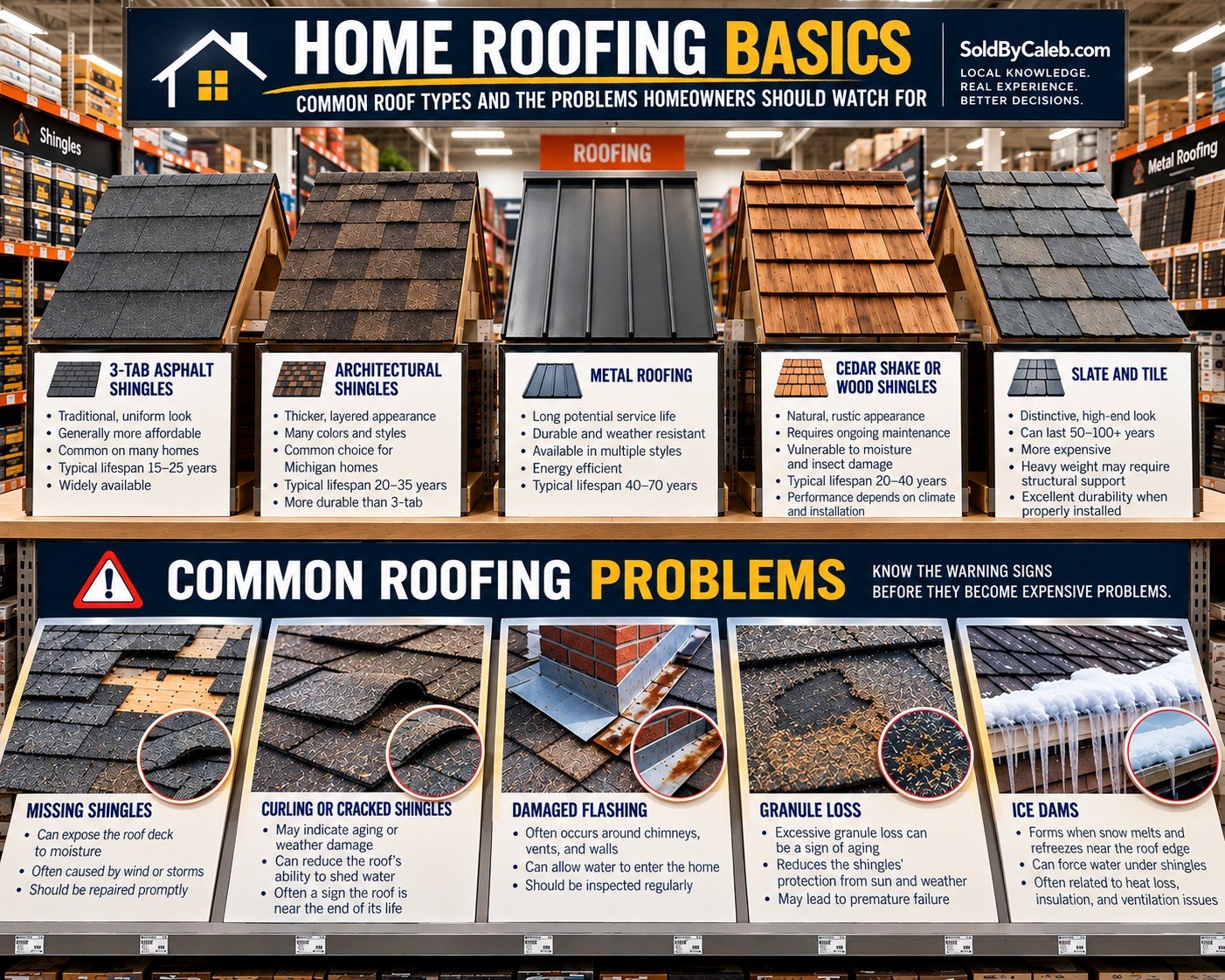
2. Common Types of Residential Roofing
Not every roof uses the same materials. Each option has advantages, limitations, and different maintenance requirements.
3-Tab Asphalt Shingles
Traditional asphalt shingles with a relatively flat appearance.
Generally one of the more affordable options
Common on older residential roofs
Often have a shorter service life than architectural shingles
Increasingly less common on new roofing installations
Architectural Asphalt Shingles
Also called dimensional or laminated shingles.
Thicker, layered appearance
Available in many colors and styles
Common choice for Michigan homes
Often offer improved durability compared with basic 3-tab shingles
Metal Roofing
Available in standing seam panels and other profiles.
Long potential service life
Durable when properly designed and installed
Higher initial investment in many cases
Installation details, expansion, and snow management require attention
Cedar Shake or Wood Shingles
Natural appearance
Require ongoing maintenance
Vulnerable to moisture-related deterioration
Performance depends heavily on climate and installation
Slate and Tile
Distinctive architectural appearance
Can offer exceptional longevity
Generally more expensive
Weight and structural support must be considered
For most Southeast Michigan homeowners, architectural asphalt shingles offer a practical balance of appearance, cost, and performance.
3. How Long Should a Roof Last?
One of the most common questions buyers ask is, "How old is the roof?"
That's a good starting point, but age doesn't tell the entire story.
Asphalt shingles may last roughly 15 to 35 years depending on the product, installation, exposure, and maintenance. Some specialty roofing materials can last considerably longer.
Factors affecting roof lifespan include:
Quality of materials and installation
Sun exposure and temperature changes
Wind, hail, and storm damage
Attic ventilation
Roof slope and complexity
Previous repairs and maintenance
A 20-year-old roof in good condition may have useful life remaining. A much newer roof can develop leaks because of poor installation.
The important question isn't simply how old the roof is. It's what condition the entire roofing system is in today.
Also, a manufacturer's 30-year or lifetime shingle warranty should not be interpreted as a guarantee that the roof will remain problem-free for that period.
4. Warning Signs of Roofing Problems
You don't need to be a roofing contractor to recognize some common warning signs.
Look for:
Missing shingles: Areas where shingles have blown off or become displaced.
Curling or cracked shingles: Possible signs of aging, deterioration, or weather damage.
Granule loss: Excessive loss of the protective mineral surface on asphalt shingles.
Damaged flashing: Loose, corroded, or improperly installed metal around roof penetrations.
Water stains: Discoloration on ceilings, walls, or attic surfaces that may indicate moisture intrusion.
Sagging rooflines: Possible structural or decking concerns that deserve prompt evaluation.
Repeated ice dams: Ice buildup along roof edges that may be associated with heat loss and drainage problems.
Deteriorated decking: Soft, damaged, or visibly deteriorating roof sheathing.
Some problems can be identified from the ground. Others require a professional evaluation.
Never climb onto a steep, icy, wet, or otherwise unsafe roof to investigate a suspected problem.
5. Michigan Weather Creates Special Challenges
Michigan roofs experience hot summers, freezing winters, snow accumulation, and frequent temperature changes.
One particularly important issue is ice damming.
What is an ice dam?
An ice dam forms when snow melts on a warmer portion of the roof and refreezes near a colder roof edge.
As ice accumulates, melting water can back up beneath roofing materials and potentially enter the home.
The solution isn't always a new roof.
Air leaks from the living space, insufficient attic insulation, and ventilation problems can contribute to ice dam formation.
According to ENERGY STAR's attic ventilation guidance, proper air sealing, insulation, and attic ventilation work together to reduce the potential for ice dams.
Michigan homeowners should also pay attention to flashing, gutters, downspouts, and proper drainage.
6. Repair or Replace the Roof?
Not every roofing problem requires a complete replacement.
A few missing shingles, a damaged plumbing vent boot, or a localized flashing issue may be repairable.
A full replacement becomes more likely when there is widespread deterioration, repeated leaking, significant storm damage, or multiple failing components.
Before deciding, consider:
Is the damage isolated or widespread?
What is the overall condition of the shingles?
Is the roof decking sound?
Have previous repairs been successful?
Is the roof approaching the end of its expected service life?
Would a repair provide a reasonable long-term solution?
When replacing a roof, ask the contractor whether the proposal includes removal of existing materials, replacement of damaged decking, new flashing, underlayment, ice protection, ventilation improvements, and cleanup.
Also verify applicable permits, contractor credentials, insurance, and warranty details. Requirements vary by municipality.
A lower roofing estimate isn't necessarily a better value if important components are being omitted.
If you're considering several expensive improvements, it may also be worth evaluating your long-term plans for the property. My article Renovate or Move? Before You Spend $100,000 Into Your Metro Detroit Home explores how to think through major improvement decisions.
7. What Home Buyers Should Know
When purchasing a home, roof condition can affect both future expenses and negotiations.
Ask the seller:
When was the roof last replaced?
Was it a complete tear-off or an additional layer of shingles?
Are there permits, invoices, or warranty documents?
Have there been leaks or previous repairs?
Was the decking replaced where needed?
Are there known ventilation or ice dam problems?
A general home inspection can identify visible concerns, but the inspector may not walk on the roof or examine every concealed component.
If the roof's condition is questionable, a qualified roofing contractor may be able to provide a more detailed assessment.
For other important areas to investigate, read What to Inspect Before Buying an Older Michigan Home.
8. What Home Sellers Should Know
An aging roof doesn't automatically mean you need to replace it before selling.
However, visible damage, active leaks, or a roof nearing the end of its service life can influence buyer confidence, insurance considerations, and negotiations.
Before listing, consider having questionable areas evaluated and addressing known problems.
If the roof was recently replaced, keep documentation available. Buyers may appreciate knowing who performed the work, what materials were installed, and whether a transferable warranty exists.
The goal is to understand the roof's condition and make an informed decision about repairs, pricing, and marketing.
9. Simple Roof Maintenance Checklist
A little attention can help prevent minor issues from becoming expensive problems.
Visually check the roof after major storms.
Keep gutters and downspouts clear and functioning.
Watch for damaged or missing shingles.
Check ceilings and accessible attic areas for moisture.
Have damaged flashing or roof penetrations evaluated.
Address leaks promptly.
Keep tree branches from damaging roofing materials.
Arrange professional inspections when conditions warrant.
Roof maintenance is generally less expensive than repairing extensive water damage caused by a neglected problem.