
Thanksgiving puts a kitchen through one of its busiest days of the year. Between preparing meals, washing dishes, and cleaning up afterward, a kitchen sink can handle a surprising amount of water and food waste.
Understanding what happens beneath the sink can help homeowners prevent plumbing problems and help homebuyers recognize potential issues before purchasing a house.
What Happens When Water Goes Down the Sink?
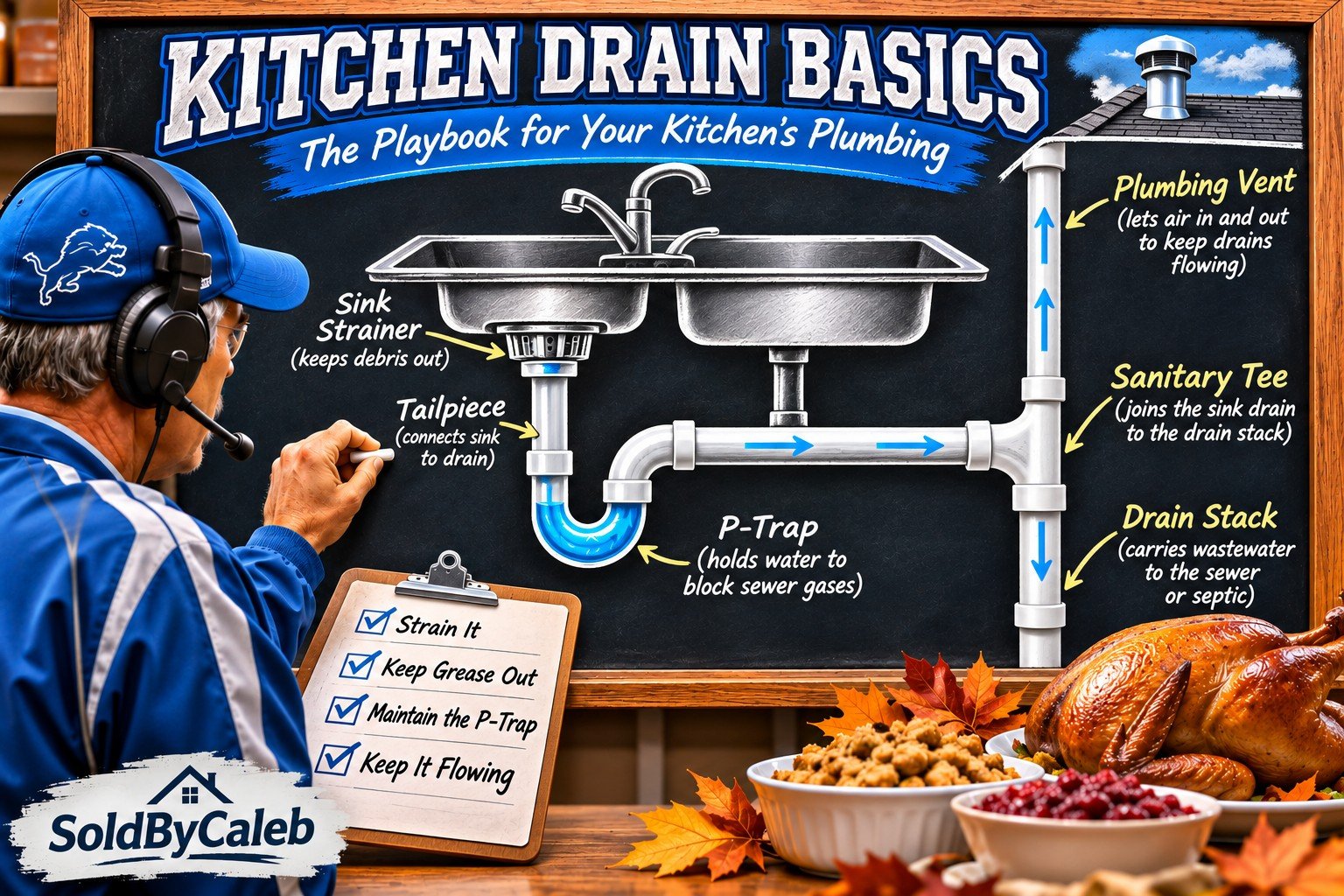
The kitchen sink is connected to a series of pipes that carry wastewater away from the house. Several components work together to make this possible.
Sink strainer: Helps keep larger objects out of the drain.
Tailpiece: Connects the sink drain to the plumbing below.
P-trap: Holds a small amount of water to prevent sewer gases from entering the house.
Drain line: Carries wastewater into the home's larger drainage system.
Plumbing vent: Helps balance air pressure within the drainage system.
From there, wastewater travels toward either a municipal sewer system or a private septic system.
For a broader look at residential water supply lines, drainage systems, and common plumbing concerns, read Home Plumbing Basics.
Why Is There a Curved Pipe Under the Sink?
That curved section of pipe is called a P-trap. Its shape allows a small amount of water to remain inside after the sink has finished draining.
This water creates a barrier between the home's interior and gases within the drainage system. A leaking or improperly installed trap can compromise that water seal.
In a sink that goes unused for an extended period, the water inside the trap can eventually evaporate. Running water into the sink can restore the water seal if evaporation is the cause.
Where Does Cooking Grease Go?
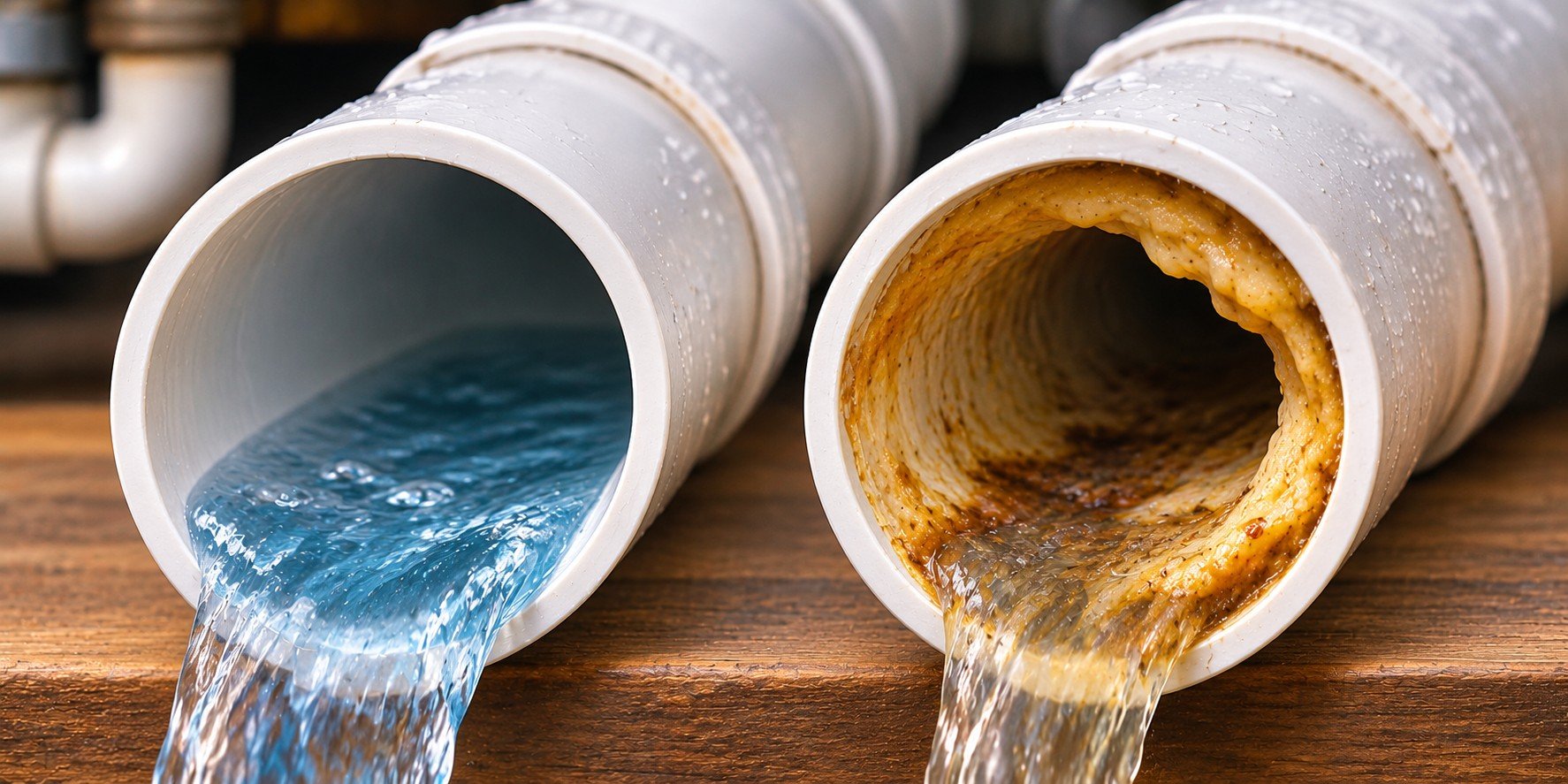
Hot cooking grease may look like an ordinary liquid when poured into a sink. As it cools, however, it can solidify or accumulate along the inside of drainage pipes.
Over time, grease can combine with other materials and restrict the flow of wastewater. These restrictions can develop beneath the sink, farther inside the house, or within the sewer system.
Running hot water afterward may move the grease farther down the pipe, where it can cool again.
A better approach is to let cooking grease cool safely, collect it in a suitable container, and dispose of it according to local waste guidelines.
What About the Garbage Disposal?
A garbage disposal breaks food scraps into smaller pieces so they can pass through the drainage system. That material still enters the home's plumbing.
Materials best kept out of the disposal include:
Cooking oils, fats, and grease
Large bones
Corn husks and other fibrous materials
Large quantities of rice or pasta
Nonfood materials
Follow the disposal manufacturer's instructions for acceptable materials and operation.
Homeowners with septic systems should be especially mindful of garbage disposal use because additional food waste increases the amount of solids entering the septic tank.
Why Does a Kitchen Sink Gurgle?
A properly functioning drainage system needs both water flow and air movement. Plumbing vents help balance air pressure as wastewater moves through the pipes.
Persistent gurgling may indicate a partial blockage, a venting problem, or another drainage issue. If multiple fixtures throughout the house are draining slowly or making unusual noises, the problem may extend beyond the kitchen sink.
A sewer camera inspection can help identify problems farther downstream. Learn more in Getting Ready to Buy a Home? Don't Overlook the Sewer Line.
What Should Homebuyers Look For?
During a showing or home inspection, take a look inside the cabinet beneath the kitchen sink.
Common things worth investigating include:
Water stains or swollen cabinet flooring
Active leaks around plumbing connections
Unusual sewer odors
Slow-draining water
Corroded or damaged pipes
Improperly configured drain connections
Evidence of previous plumbing repairs
Older Michigan homes may contain cast iron, galvanized steel, copper, plastic, or a combination of drainage materials installed during different periods of ownership.
For a better understanding of what inspectors evaluate throughout a house, read Home Inspection Basics.
What If the House Has a Septic System?
Homes connected to private septic systems require additional consideration. Everything entering the kitchen drain ultimately becomes part of the wastewater that the septic system must handle.
The U.S. Environmental Protection Agency recommends limiting garbage disposal use and keeping fats, oils, and grease out of septic systems.
If you're considering purchasing a property with a private septic system, read Buying a Home With a Septic System? Here's What Buyers Should Know.
Five Minutes Well Spent
Open the cabinet beneath your kitchen sink today. Identify the P-trap, locate the water shutoff valves, check for moisture around the connections, and look for evidence of previous leaks.
Knowing how the plumbing beneath your sink works can help you recognize problems early and make more informed decisions about your home.
A little knowledge today could save a considerable amount of cleanup tomorrow.
Real Estate. Real Guidance. Real Results.