

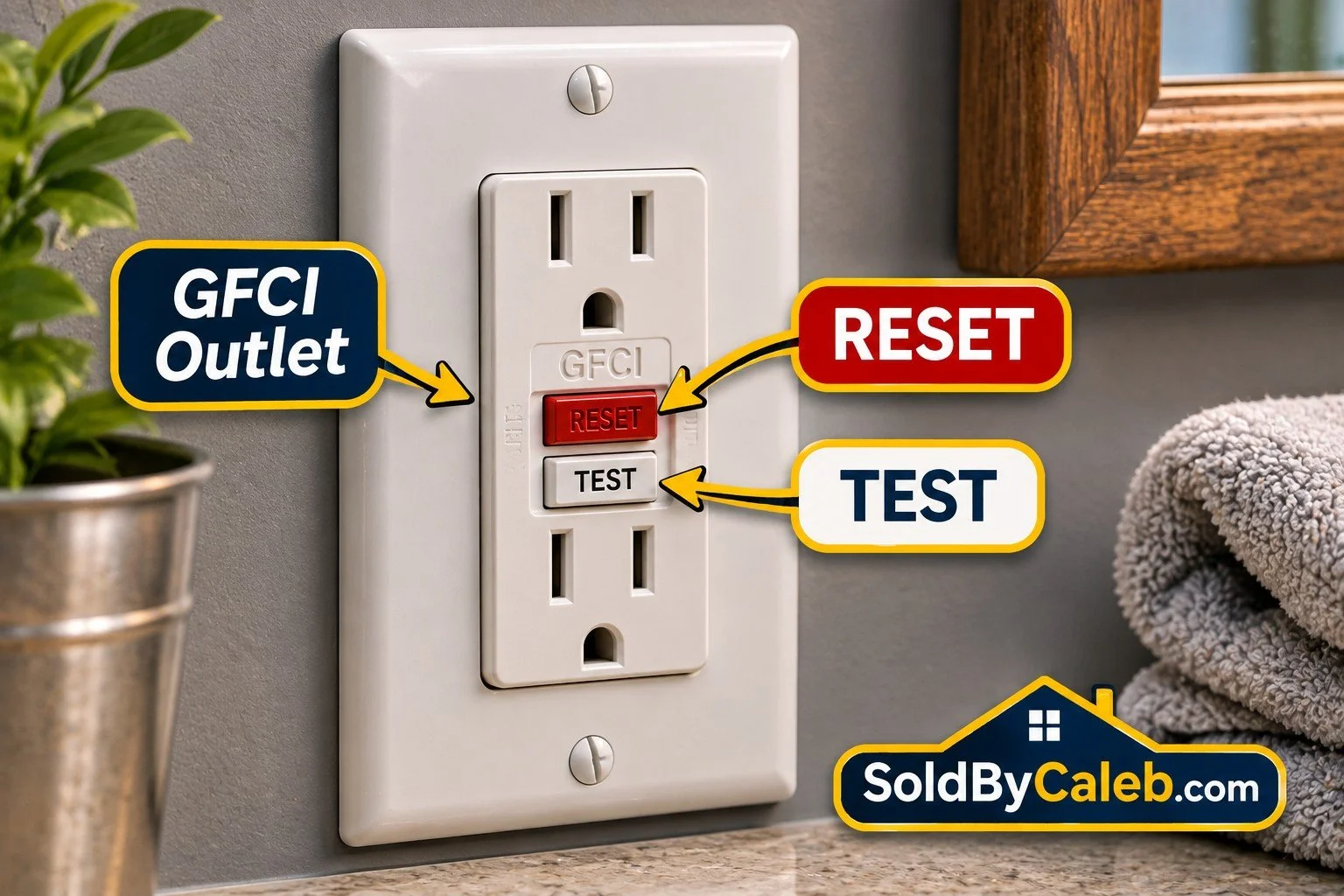
You've probably noticed electrical outlets in kitchens, bathrooms, and garages with two small buttons marked TEST and RESET. They may look like ordinary outlets with a couple of extra features, but there's quite a bit happening behind that cover plate.
These devices have been protecting homeowners from electrical shock for more than 50 years.
What Is a GFCI?
GFCI stands for Ground-Fault Circuit Interrupter.
Its primary purpose is to protect people from dangerous electrical shocks by monitoring the electrical current flowing through a circuit. When it detects electricity taking an unintended path, it quickly shuts off power.
GFCI protection first appeared in residential requirements of the National Electrical Code in 1971. Over the years, those requirements have expanded to cover more areas of the home.
How Does a GFCI Work?
Think of electricity traveling around a loop. Under normal conditions, the electrical current leaving through the hot conductor should match the current returning through the neutral conductor.
A GFCI continuously compares those two amounts.
If some of that electricity takes another path, potentially through a person, the device detects the difference and disconnects power.
According to the Occupational Safety and Health Administration (OSHA), a GFCI can detect an imbalance of approximately five milliamps and interrupt power in as little as 1/40 of a second under certain conditions.
That's faster than most people can react.
Where Will You Find GFCI Protection?
GFCI protection is commonly found in areas where electricity and moisture may come into contact.
Typical residential locations include:
Bathrooms
Kitchens
Garages
Basements
Laundry rooms
Crawl spaces
Outdoor outlets
Areas near swimming pools and hot tubs
Requirements have expanded over the years, which helps explain why an older Michigan bungalow may have fewer protected outlets than a recently constructed home.
The Electrical Safety Foundation International provides an illustrated guide to common GFCI locations and testing procedures.
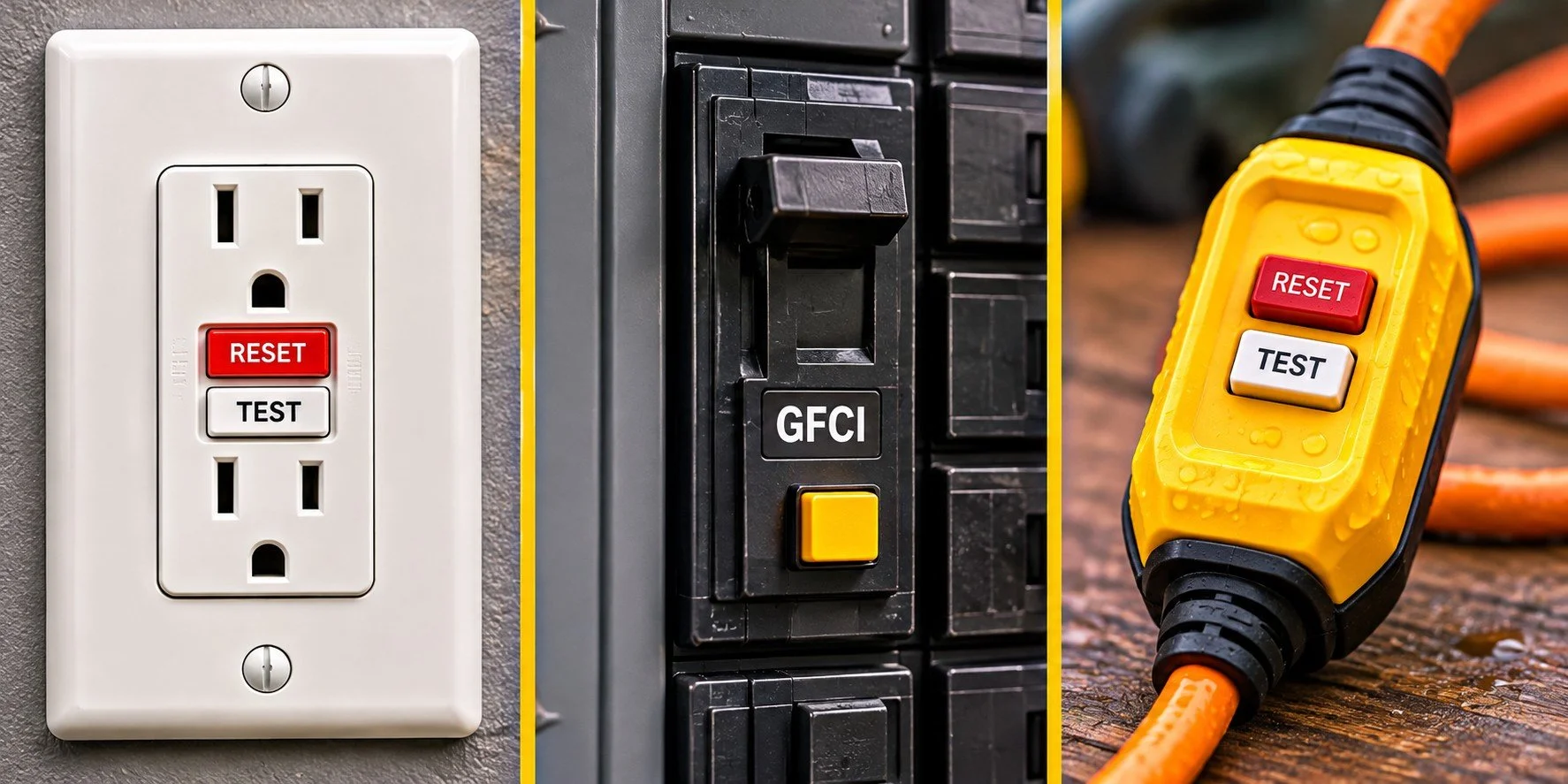
Three Different Ways to Provide GFCI Protection
GFCI protection comes in several forms.
GFCI Receptacle
The familiar wall outlet with built-in TEST and RESET buttons.
GFCI Circuit Breaker
Installed inside the electrical panel, providing ground-fault protection to the circuit it serves.
Portable GFCI
A plug-in or cord-connected device commonly used with tools and equipment.
All three provide the same basic type of ground-fault protection through different arrangements.
Why Did the Bathroom Outlet Stop Working?
Here's where things get interesting.
A single GFCI receptacle can provide protection to additional outlets connected downstream. Those other outlets may look completely ordinary and have no TEST or RESET buttons.
In some homes, resetting a GFCI in the garage may restore power to an outdoor outlet or another protected location. The arrangement depends on how the house was wired.
If an outlet suddenly stops working, a tripped GFCI elsewhere in the home is one possible explanation.
Knowing which outlets are connected can save time when troubleshooting a loss of power.
GFCI vs. a Standard Circuit Breaker
Both devices interrupt electricity, but they monitor different conditions.
Standard circuit breaker: Protects wiring against excessive current caused by overloads and short circuits.
GFCI: Helps protect people against dangerous ground-fault shocks.
AFCI: Helps reduce the risk of electrical fires associated with certain types of electrical arcing.
Some modern circuit breakers combine multiple types of protection into a single device.
A GFCI may interrupt power even when the electrical current is well below the rating of a standard circuit breaker.
For a closer look at electrical panels, circuit breakers, outlets, and residential wiring, read our Home Electrical Basics guide.
What About Older Michigan Homes?
Many homes throughout Michigan were built before GFCI protection became common.
One interesting feature of GFCI technology is that it can provide ground-fault protection even on certain older two-wire electrical circuits without an equipment grounding conductor.
Under applicable electrical code provisions, properly installed and labeled GFCI protection may be used when replacing certain ungrounded receptacles.
The GFCI provides shock protection, but it does not create an equipment ground.
If you're purchasing an older home with two-prong outlets, this is something worth discussing with a licensed electrician.
Electrical wiring is just one of several things worth investigating when purchasing an older house. Learn more in our guide to Inspecting Older Michigan Homes.
What Do the TEST and RESET Buttons Do?
The TEST button activates an internal testing mechanism that should cause the GFCI to disconnect power.
The RESET button restores power after the device has tripped, provided the device and circuit are functioning properly.
The U.S. Consumer Product Safety Commission recommends testing GFCIs at least once a month, following the manufacturer's instructions.
Here's a simple way to test a GFCI receptacle:
Plug in a small lamp or nightlight and turn it on.
Press TEST. The light should go out.
Press RESET. The light should come back on.
If the outlet fails the test, have a qualified electrician inspect it.
Keep in mind that testing a GFCI may temporarily interrupt power to other connected outlets and equipment.
What Causes a GFCI to Trip?
A GFCI may interrupt power for several reasons, including moisture entering an electrical device, damaged wiring, deteriorated insulation, or a faulty appliance.
Outdoor holiday lighting is a good seasonal example. Rain, melting snow, and moisture entering damaged electrical connections can cause ground faults.
Repeated tripping deserves attention. Unplug the affected equipment if it is safe to do so and have persistent problems investigated by a qualified electrician.
What Homebuyers Should Look For
During a home inspection, take the opportunity to learn where GFCI protection is located and how the electrical system is arranged.
Things worth discussing with your inspector include:
GFCI protection near sinks and other moisture-prone locations
Outdoor receptacles
Older two-prong outlets
GFCI circuit breakers inside the electrical panel
Outlets that fail testing
Ordinary-looking outlets protected by another GFCI
Electrical requirements vary depending on the age of the home, applicable codes, and subsequent renovations. Your inspector or electrician can help identify appropriate safety improvements.
For a better understanding of what inspectors evaluate during a home purchase, read our Home Inspection Basics guide.
Two Little Buttons With a Big Responsibility
GFCI protection is one of the many electrical safety improvements that have become part of everyday home construction.
Take a few minutes to identify the GFCI devices in your home, learn which outlets they protect, and make monthly testing part of your home maintenance routine.
Those two little buttons are there for an important reason.
Additional Resources
Electrical Safety Foundation International — How to Use GFCIs
National Fire Protection Association — Checking GFCI Protection
Explore more practical information about buying, selling, and maintaining Michigan homes at SoldByCaleb.com.