
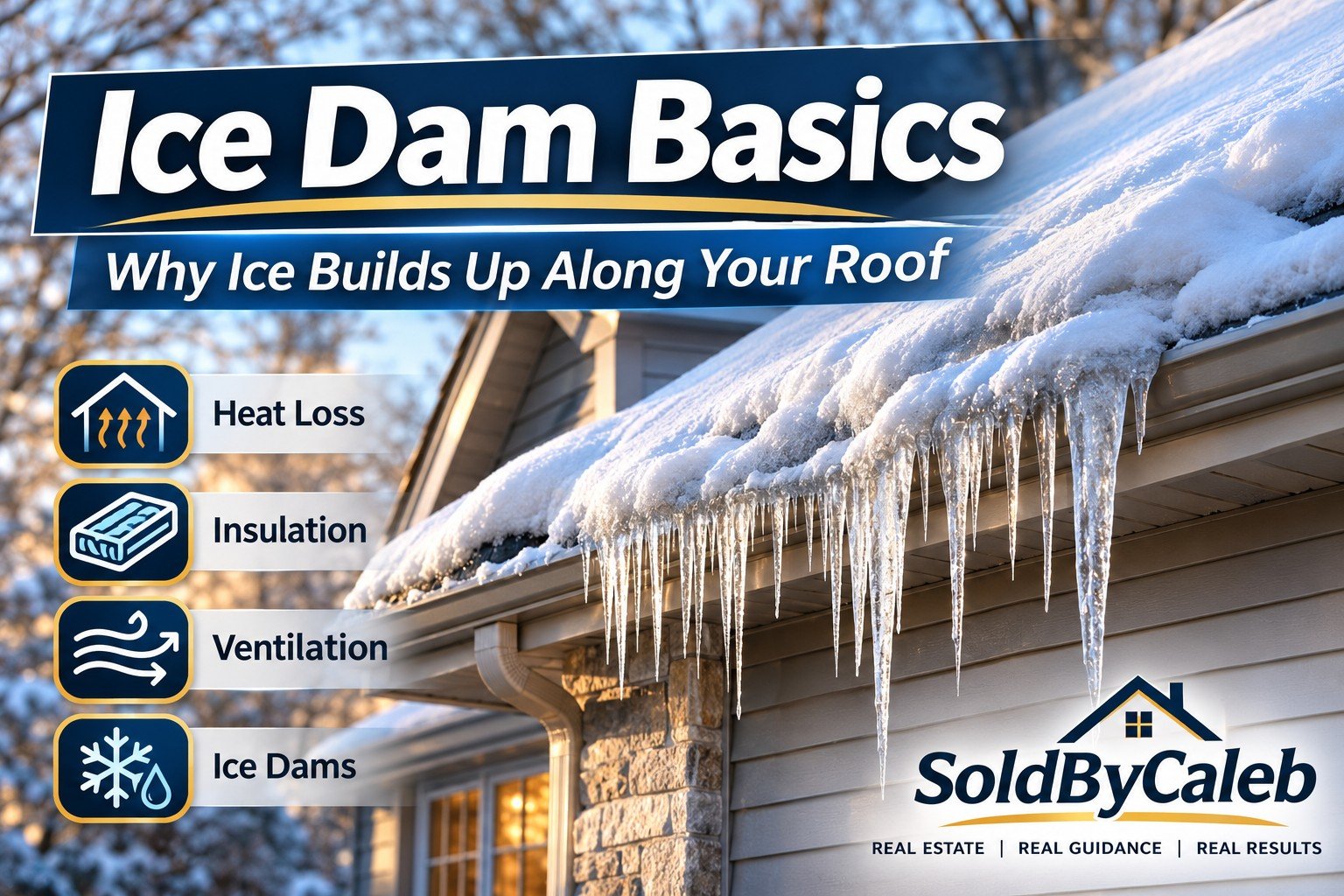
During a Michigan winter, you may notice one house covered evenly with snow while another has bare patches on its roof and large icicles hanging from the gutters.
These differences can provide clues about how heat moves through a house. Under certain conditions, melting snow can also create an ice dam that allows water to enter beneath the roofing materials.
Understanding how this happens can help homeowners prevent damage and help buyers better evaluate a house during the winter months.
What Is an Ice Dam?
An ice dam is a buildup of ice along the lower portion of a roof that prevents melting snow from draining properly.
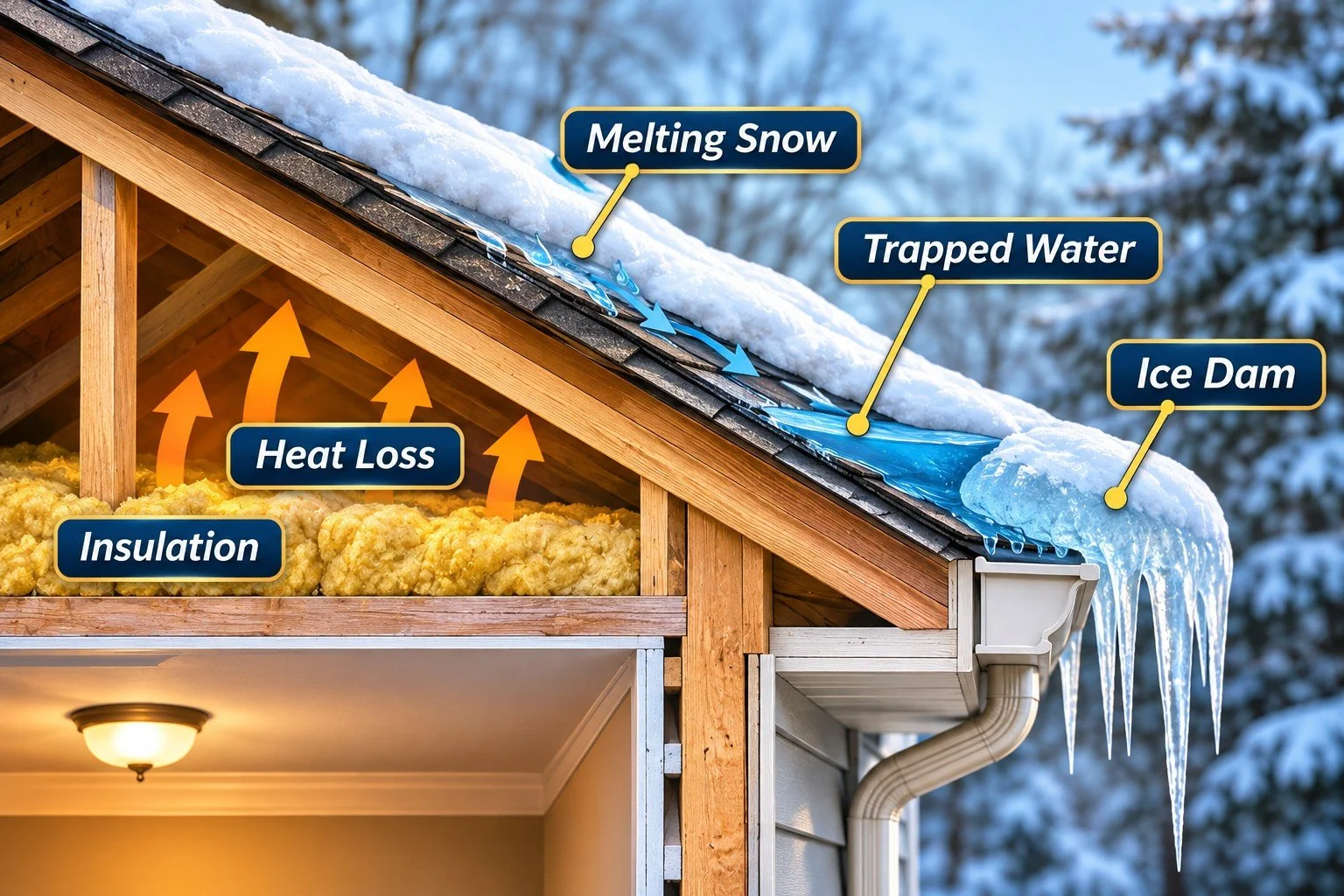
When part of the roof becomes warm enough to melt snow, water runs toward the colder overhang. If temperatures there are below freezing, the water can freeze again.
As this process continues, ice can accumulate and create a barrier. Additional melting snow can collect behind that barrier and work its way beneath the shingles.
Water may eventually enter the attic, exterior walls or ceilings below.
How Does an Ice Dam Form?
Several conditions can contribute to ice dam formation, including heat escaping from the living space, uneven roof temperatures and repeated freezing and thawing.
Consider a typical house with an unfinished, ventilated attic. Heat from inside the house can escape through openings in the ceiling or pass through areas with insufficient insulation.
This can warm portions of the roof above the heated living space while the roof overhang remains colder.
Roof design, sunlight and outdoor temperature changes can also influence where snow melts.
The U.S. Department of Energy's guidance on roof eaves in cold climates explains how these conditions can lead to water entering beneath roofing materials.
Three Parts of the House Work Together
Preventing ice dams often involves understanding three different parts of the home's construction.
Air sealing: Reduces the movement of warm indoor air through openings into the attic.
Insulation: Slows heat transfer between the heated living space and colder areas of the house.
Ventilation: In a conventional vented attic, allows outside air to circulate and helps manage attic temperature and moisture.
Each serves a different purpose. A properly designed system considers how all three work together.
Some homes use unvented roof assemblies, which require a different approach to insulation and moisture management.
What Can Snow Tell You About a House?
After a snowfall, take a look at the roofs throughout your neighborhood.
You may notice snow melting near attic access areas, along certain roof sections or above heated rooms. These patterns can provide clues about where heat may be escaping.
Sun exposure, wind, roof direction and differences in construction can also affect snow coverage, so roof appearance alone cannot establish whether an insulation problem exists.
An attic inspection or professional energy assessment can help determine what's happening.
What About Gutters?
Gutters collect water and direct it away from the house. Keeping them clear is an important part of regular home maintenance.
However, ice dams can form on homes with or without gutters. The primary issue is snow melting and refreezing as it moves across different roof temperatures.
For more information about managing water around a house, read Gutters and Drainage Basics.
What Is Ice and Water Shield?
Ice and water shield is a commonly used name for a self-adhering roofing membrane installed beneath shingles in areas vulnerable to water intrusion.
Along the lower edge of a roof, this membrane provides an additional layer of protection if water backs up beneath the shingles.
It helps protect the roof assembly from water damage, while air sealing, insulation and appropriate roof design address conditions that contribute to ice dam formation.
For a better understanding of the different layers and components of a residential roof, read Home Roofing Basics.
What Should Michigan Homebuyers Look For?
Winter showings provide an opportunity to observe how a house performs during colder weather.
Things worth investigating include:
Large accumulations of ice along roof edges
Unusual or uneven snow-melt patterns
Water stains near exterior walls and ceilings
Evidence of previous attic moisture problems
Missing, compressed or uneven attic insulation
Blocked attic ventilation openings
Ask whether the property has experienced winter roof leaks, ice dams or previous insulation improvements.
These observations are particularly useful when purchasing an older house. Our guide on What to Inspect Before Buying an Older Michigan Home covers additional areas worth evaluating.
What If You Already Have an Ice Dam?
If water is entering the house, contact a qualified professional to address the immediate problem and investigate its cause.
Avoid climbing onto an icy roof or attempting to break apart the ice with tools that could damage shingles or gutters.
A roofing contractor can evaluate the roof and water intrusion, while an insulation or weatherization professional can investigate heat loss.
The University of Minnesota Extension's guide to preventing ice dams provides additional information about prevention and professional evaluation.
Five Minutes Well Spent
The next time it snows, spend a few minutes looking at your roof from the ground. Pay attention to where snow melts first, where ice accumulates and whether certain areas behave differently from others.
Your roof can provide useful clues about what's happening inside your house.
Understanding those clues can help you ask better questions, plan improvements and make more informed real estate decisions.
Real Estate. Real Guidance. Real Results.