

Panels, Outlets, Wiring, and What Buyers Should Know
A home's electrical system is easy to overlook until something stops working. Whether you're buying an older Michigan home or maintaining the one you own, understanding a few basics can help you recognize potential problems.
100 Amp vs. 200 Amp Electrical Service
The electrical service determines how much power a home can receive.
100 amp service: Common in older and smaller homes. It may be adequate depending on the home's electrical demands.
200 amp service: Provides greater capacity for modern appliances, electric vehicle charging, and other electrical needs.
More than 200 amps: Sometimes found in larger homes with substantial electrical equipment.
A 100 amp system isn't automatically defective or inadequate. A licensed electrician can determine whether the service and panel have sufficient capacity.
Circuit Breakers and Electrical Panels
The electrical panel distributes power throughout the house. Circuit breakers protect circuits by shutting off power when certain electrical faults occur.
Check for:
Breakers that trip repeatedly
Rust, water damage, or signs of overheating
Missing panel covers or openings
Poorly labeled circuits
Panels or components with known safety concerns
A panel's manufacturer, condition, installation, and actual wiring matter more than its age alone.
Grounded Outlets and GFCI Protection
Three-prong outlets are designed for equipment grounding, but the presence of three holes does not prove an outlet is properly grounded.
GFCI outlets help protect people from electrical shock. They are commonly required in locations such as bathrooms, kitchens, garages, and certain basement and outdoor areas.
AFCI protection is different. It helps reduce fire hazards associated with certain electrical arcing faults.
Requirements depend on the applicable code and the work being performed.
Older Wiring: What Should Buyers Know?
Older Michigan homes may have different types of wiring and electrical panels. Here are four common examples you might encounter.
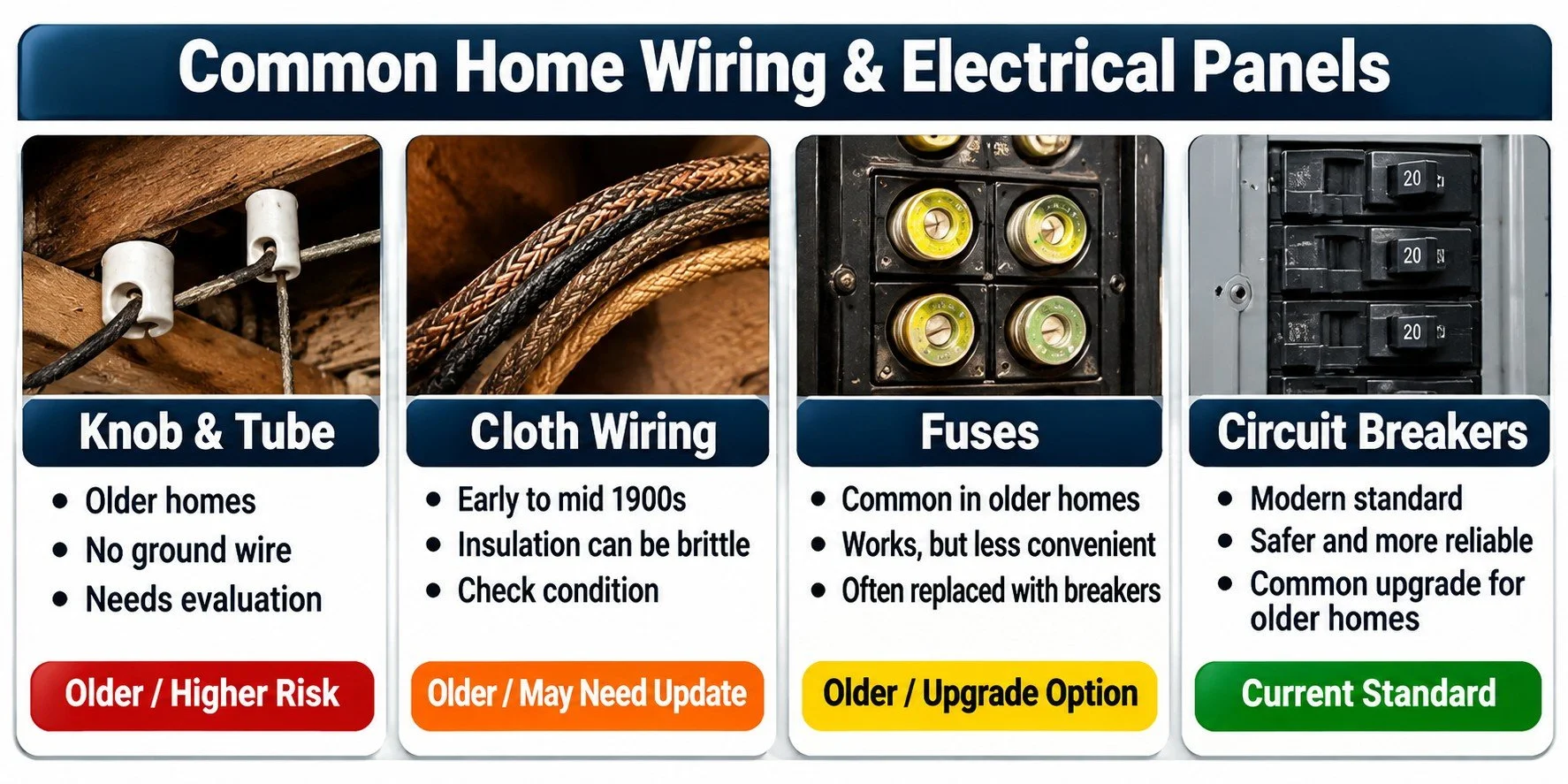
Knob and Tube Wiring: Found in older homes, typically without a grounding conductor. Its condition and any modifications should be evaluated by an electrician.
Cloth Wiring: Common in older homes. Insulation can become brittle or deteriorate over time.
Fuse Boxes: Older electrical panels that use replaceable fuses instead of resettable circuit breakers. They aren't automatically unsafe, but their condition and capacity should be checked.
Circuit Breaker Panels: Common in modern homes. Breakers can be reset after tripping, but the panel and wiring still need to be properly installed and maintained.
Does older wiring need to be replaced?
Not necessarily. Age alone doesn't determine whether an electrical system is safe. Its condition, installation, capacity, and any previous modifications matter.
If you're buying an older home, have questionable wiring or electrical panels evaluated by a licensed electrician before deciding what repairs or upgrades are necessary.
Warning Signs You Shouldn't Ignore
Call a qualified electrician if you notice:
Frequent breaker trips
Flickering or dimming lights
Warm or discolored outlets
Buzzing or crackling sounds
Burning smells
Sparks or electrical shocks
Never ignore signs of overheating or repeatedly reset a breaker without investigating the cause.
Before Buying a Michigan Home
A general home inspection can identify visible concerns, but it is not a complete electrical evaluation.
If questions arise, request an assessment from a licensed electrician before your inspection contingency expires.
Michigan electrical work may require permits and inspections. Check with the local building department before making changes.
For more information, review the Electrical Safety Foundation International.
You can also explore my Home Buying Resources for additional guidance on evaluating a property.