

If a water pipe broke inside your house right now, would you know how to stop the water?
The main water shutoff valve is one of the simplest and most useful components of a home's plumbing system. Whether you're buying a house, preparing for a Michigan winter, or simply learning more about your home, knowing where this valve is located and how it works is time well spent.
Let's take a closer look at this small but important part of a house.
Where Does Your Water Come From?
In a home connected to municipal water, an underground service line carries water from the public water main to the house. This pipe typically enters through the foundation wall or beneath the floor.
Near the point where the water enters, you'll commonly find a water meter and shutoff valves. From there, the plumbing system distributes water throughout the house to sinks, toilets, showers, appliances, and outdoor faucets.
Homes supplied by private wells have a different arrangement, typically involving a well pump, pressure tank, and additional plumbing controls.

Where Is the Main Water Shutoff Valve?
In many Michigan homes with municipal water, the main shutoff valve is located in the basement near the water meter.
Other common locations include:
Along the front foundation wall
Inside a crawl space
In a utility or mechanical room
Behind a plumbing access panel
Near the pressure tank in a home with a private well
A good starting point is to locate the incoming water supply pipe and follow it into the house.
Some homes have shutoff valves on both sides of the water meter. One controls the incoming supply before the meter, while the other controls the water flowing from the meter into the home's plumbing system.
The City of Grand Rapids Winter Preparedness Guide includes information and an illustration explaining water meter and shutoff valve locations.
Two Common Types of Water Shutoff Valves
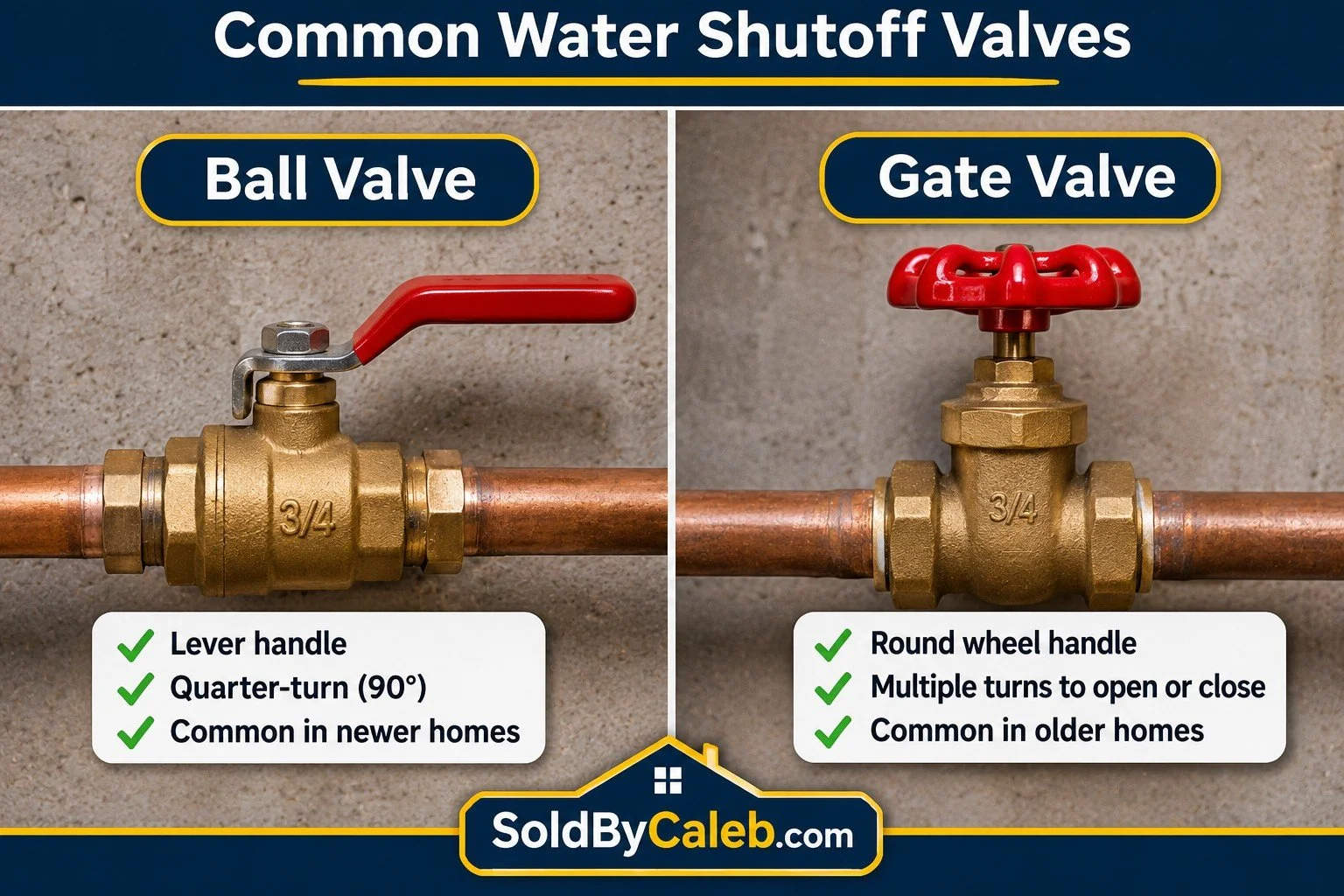
There are several types of plumbing valves, but ball valves and gate valves are two commonly found in Michigan homes.
Ball Valve
A ball valve typically has a lever-style handle that turns 90 degrees.
Handle parallel to the pipe: Open.
Handle perpendicular to the pipe: Closed.
Ball valves are commonly used in modern residential plumbing because they provide a quick and simple way to control water flow.
Gate Valve
A gate valve typically has a round, wheel-shaped handle. Turning the handle raises or lowers an internal gate that controls the flow of water.
Turn counterclockwise to open.
Turn clockwise to close.
Unlike a ball valve, a gate valve usually requires several full rotations to open or close.
Gate valves are frequently found in older plumbing systems. If a valve is difficult to turn, heavily corroded, or leaking, have a plumber evaluate it rather than forcing it.
What's Actually Happening Inside the Valve?
The internal design of these valves is surprisingly simple.
A ball valve contains a metal ball with a hole through its center. When that hole lines up with the pipe, water flows through it. Turning the handle a quarter turn rotates the ball, blocking the passage.
A gate valve works more like a miniature sliding door. Turning the handle moves an internal gate upward or downward, opening or closing the passage through the valve.
Both designs accomplish the same basic task using different mechanical movements.
Your House Has More Than One Shutoff Valve
The main shutoff controls the domestic water supply throughout the house, but smaller valves allow individual fixtures and appliances to be isolated.
Common examples include:
Kitchen sink: Controls water to the kitchen faucet.
Bathroom sink: Controls water to the bathroom faucet.
Toilet: Usually located behind or beside the toilet.
Washing machine: Controls the hot and cold water supply hoses.
Water heater: Controls the incoming cold water supply.
Outdoor faucet: May have a separate interior shutoff valve.
Dishwasher: Often located beneath the kitchen sink.
These individual valves make plumbing repairs and fixture replacements much more convenient. For example, replacing a kitchen faucet may only require shutting off the water underneath the sink while the rest of the house continues to have running water.
What About the Shutoff Valve Near the Street?
You may have noticed a small metal cover near the sidewalk or in the front yard of a house.
This may provide access to what's called a curb stop, an underground valve used to control the water service entering the property.
Unlike the main shutoff inside the house, the curb stop is generally operated by the water utility or authorized personnel. Ownership and maintenance responsibilities can vary by municipality.
For example, the Detroit Water and Sewerage Department explains that it maintains water service lines up to the curb stop, while property owners are responsible for the service line between the curb stop and the building, as well as the interior plumbing.
Contact your local water department if you need the underground water supply shut off.
Why This Matters During a Michigan Winter
Water expands as it freezes. When water freezes inside a pipe, pressure can build within the plumbing system, damaging pipes and connections.
Sometimes the damage becomes apparent only after the frozen pipe begins to thaw and water starts flowing again.
According to the State of Michigan's Frozen Pipe Prevention Guide, a crack measuring just one-eighth of an inch can potentially release as much as 250 gallons of water in a single day.
That's roughly equivalent to five full 50-gallon water heaters.
Common areas where plumbing may be vulnerable to freezing include:
Unheated crawl spaces
Exterior walls
Garages
Attics
Older additions
Areas around foundation openings
Pipes supplying outdoor faucets
Insulating vulnerable pipes, sealing cold-air leaks, and disconnecting garden hoses before freezing temperatures arrive can help protect the plumbing system.
Knowing where to shut off the water can also help limit damage if a pipe breaks.
Leaving Your House for the Holidays
Whether you're traveling for Thanksgiving, Christmas, or an extended winter vacation, it's worth taking a few minutes to prepare your home before leaving.
Michigan's emergency preparedness guidance recommends keeping the thermostat at 55°F or higher while away during winter and having someone check the property daily. Homes with particularly vulnerable plumbing may require higher indoor temperatures.
The Detroit Water and Sewerage Department's Water and Sewer Tips also provides practical recommendations for protecting plumbing during winter travel.
Turning off the domestic water supply can help limit damage from certain leaks while the house is unoccupied.
However, a home with a boiler, fire sprinkler system, private well, or other specialized equipment may require additional precautions. Consult an appropriate professional before shutting down these systems.
What Homebuyers Should Look For
During a home inspection, ask the inspector to identify the main water shutoff valve. This is a good opportunity to learn a little more about the plumbing system before taking ownership.
Things worth checking include:
The location and accessibility of the main shutoff valve
The type of valve installed
Visible corrosion or leakage
The condition of nearby plumbing connections
The material of the incoming water service line
Protection from freezing temperatures
Separate shutoff valves for outdoor faucets
Ask whether the main valve was operated during the inspection. An inspector may choose not to operate an older or deteriorated valve because of the potential for leaks or damage.
During your final walkthrough, make sure you know where the main shutoff is located.
For more information about inspecting and purchasing a Michigan home, explore our SoldByCaleb Real Estate Guides.
What Home Sellers Can Do
A few simple steps can make the transition easier for the next homeowner.
Clear away boxes, furniture, and other belongings that may block access to the water meter and shutoff valve. Consider adding a clearly visible label identifying the main shutoff.
If the house is vacant during Michigan's colder months, maintain adequate heat, arrange regular property checks, and review your insurance company's requirements for unoccupied homes.
A clearly identified and accessible shutoff valve is a useful feature to point out during the sale.
What Should You Do If a Pipe Breaks?
If you discover an active plumbing leak, shutting off the water supply can help prevent additional damage.
Close the main water shutoff valve if you can reach it safely.
Keep away from standing water near electrical equipment.
Contact a plumber to identify and repair the problem.
Document the damage and contact your insurance company when appropriate.
If you suspect a pipe has frozen, never attempt to thaw it using a torch or open flame.
Additional winter plumbing guidance is available through the State of Michigan and the City of Battle Creek's Winter Water Tips.
Five Minutes Well Spent
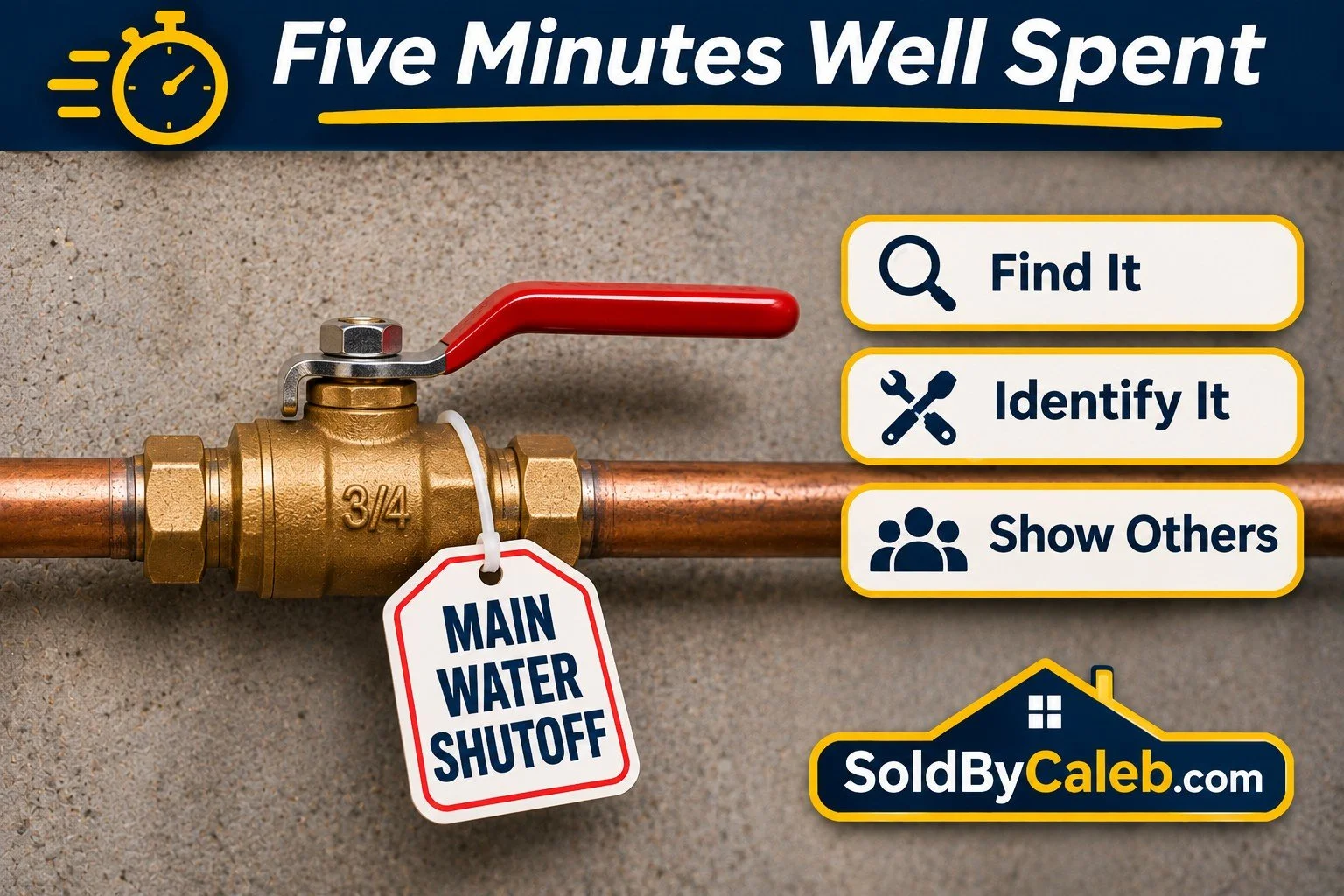
Take a few minutes today to locate your main water shutoff valve. Identify what type of valve you have, make sure it's accessible, and show other members of your household where it's located.
You can even purchase or make a simple tag that says "MAIN WATER SHUTOFF" and attach it near the valve.
It's a small detail about your house that could make a big difference when you need it most.
Explore more practical information about buying, selling, and maintaining Michigan homes at SoldByCaleb.com.