
Earnest Money Deposit (EMD) Basics: What Homebuyers Need to Know
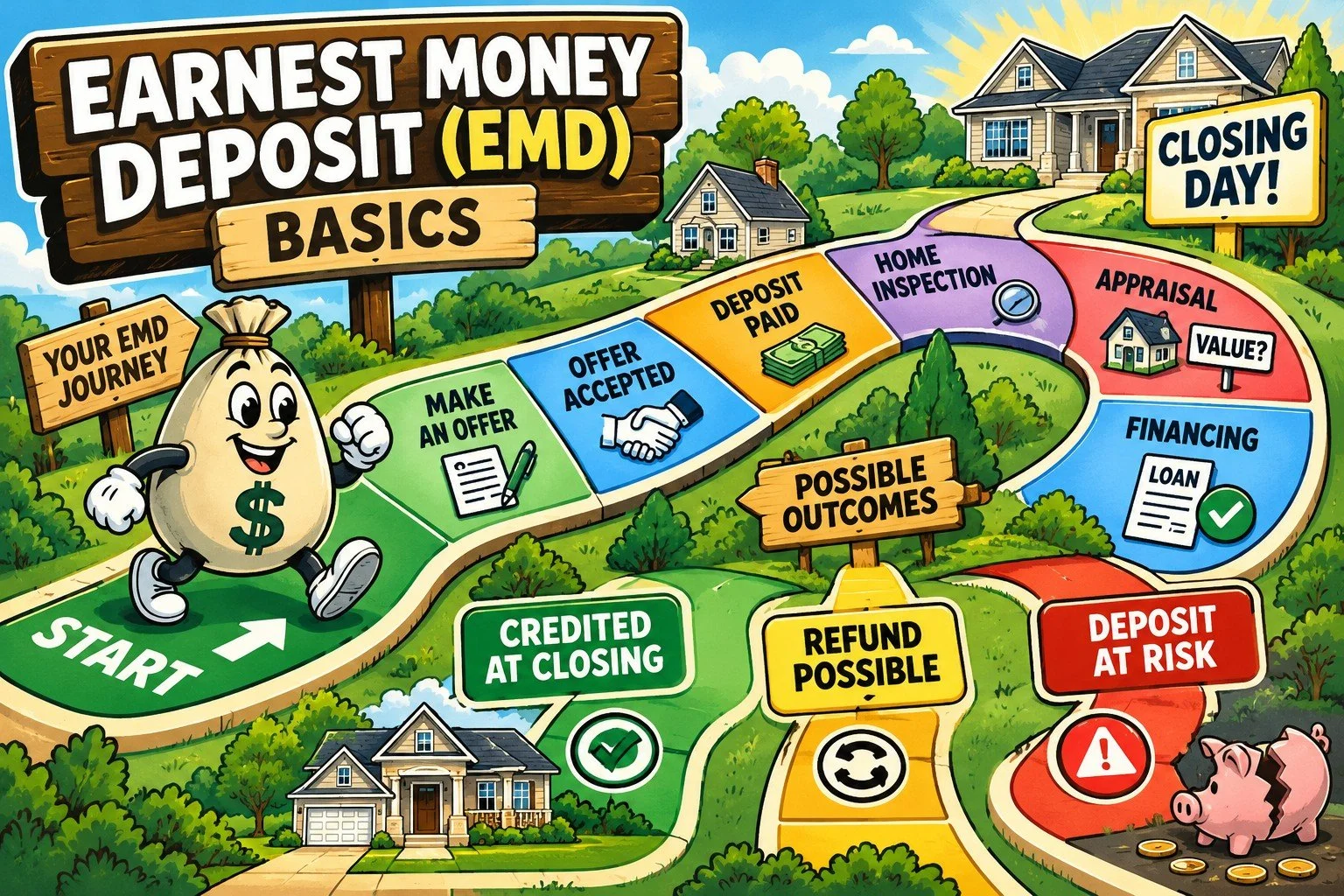
When buying a home, you may hear your real estate agent mention an earnest money deposit, often called an EMD. But what exactly is it? Where does the money go? And can you get it back if the purchase doesn't work out?
Understanding earnest money before submitting an offer can help you avoid surprises and protect your money throughout the homebuying process.
What Is an Earnest Money Deposit?
An earnest money deposit is money a buyer provides as a demonstration of good faith when entering into a purchase agreement.
It shows the seller that the buyer is serious about purchasing the property and intends to follow through with the agreed terms.
Earnest money is generally held by a designated third party, such as a title company or real estate brokerage, rather than being paid directly to the seller.
The purchase agreement identifies who will hold the deposit and when it must be delivered.
How Much Earnest Money Is Required?
There is no universal amount required for every home purchase.
The deposit is negotiated between the buyer and seller and can depend on several factors:
The purchase price of the home.
Local real estate market conditions.
Whether multiple buyers are competing for the property.
The terms and contingencies included in the offer.
The amount the buyer feels comfortable depositing.
For example, a buyer purchasing a $300,000 home might offer a $3,000 earnest money deposit.
A larger deposit may demonstrate stronger commitment, but it also means more money could be at risk if the buyer fails to meet contractual obligations.
Buyer tip: A larger earnest money deposit does not automatically make an offer better. Price, financing, contingencies, and closing terms all matter.
Where Does the Earnest Money Go?
Earnest money is typically deposited into an escrow or trust account maintained by the designated holder.
The money is held while the transaction progresses through inspections, financing, appraisal, title work, and other contractual requirements.
It is important to understand that earnest money is not an additional fee paid on top of the purchase price.
In a successful transaction, the deposit is generally credited toward the buyer's required funds at closing.
For example:
Purchase price: $300,000
Earnest money deposit: $3,000
Total down payment: $15,000
Assuming the full deposit is credited toward the down payment, the buyer would have $12,000 remaining toward that down payment, plus applicable closing costs and adjustments.
Learn more about these expenses in Homebuying Costs & Financing.
When Is Earnest Money Due?
The purchase agreement determines when the earnest money must be delivered.
Some agreements require delivery within a specified number of calendar days after acceptance, while others establish different deadlines.
Buyers should confirm:
The exact amount required.
The deadline for delivery.
The company or brokerage holding the funds.
The acceptable payment method.
Whether written confirmation of receipt will be provided.
Buyer tip: Never rely solely on emailed wiring instructions. Verify payment instructions using a trusted telephone number obtained independently.
Can You Get Your Earnest Money Back?
Yes, earnest money may be refundable under certain circumstances, but the answer depends on the language of the signed purchase agreement.
Common situations where a buyer may have a contractual right to recover earnest money include:
Inspection contingency: If the buyer discovers concerns during the inspection period and properly exercises a cancellation right provided by the agreement.
Financing contingency: If the buyer cannot obtain financing and meets the requirements and deadlines of an applicable financing contingency.
Appraisal contingency: If the property appraises below the purchase price and the agreement provides a right to terminate under those circumstances.
Seller default: If the seller fails to perform contractual obligations and the buyer is entitled to a return of the deposit under the agreement and applicable law.
Even when a buyer believes the deposit should be returned, the holder may require written authorization, mutual agreement, or another legally permitted process before releasing disputed funds.
For additional information about investigating a property before purchasing, see Home Inspections & Buyer Due Diligence.
When Could You Lose Your Earnest Money?
Earnest money can be at risk when a buyer fails to fulfill obligations under the purchase agreement.
Examples may include:
Canceling the purchase without a valid contractual reason.
Missing an inspection or financing deadline.
Failing to deliver required documents or funds.
Refusing to close when the agreement requires the buyer to proceed.
Violating other material terms of the agreement.
Whether the seller is entitled to retain the deposit depends on the contract, the circumstances, and applicable law.
Important: Earnest money is not automatically refundable simply because a buyer changes their mind.
Watch: The Truth About Earnest Money Deposits
Want a better understanding of how earnest money works during a real estate transaction?
Watch my video: The Truth About Earnest Money Deposits (EMD).
Is Earnest Money the Same as a Down Payment?
No. Although both involve money the buyer contributes toward purchasing a home, they serve different purposes.
Earnest money demonstrates the buyer's commitment to the purchase and is typically delivered shortly after the offer is accepted.
The down payment is the portion of the purchase price paid by the buyer rather than financed through the mortgage.
When the transaction closes, earnest money is generally applied toward the buyer's required funds, including the down payment and closing costs.
What Happens to Earnest Money at Closing?
When the purchase successfully closes, the earnest money deposit is accounted for on the closing statement.
The deposit reduces the amount the buyer must bring to closing, assuming the funds have been received and credited.
If the transaction does not close, the agreement and applicable law determine how the deposit should be handled.
For a closer look at the process after an accepted offer, read From Accepted Offer to Closing Day.
Final Thoughts: Understand the Terms Before You Sign
Earnest money is a normal part of many real estate transactions, but buyers should never assume the deposit is risk-free.
Before submitting an offer, make sure you understand how much money is required, where it will be held, when it is due, and the circumstances under which it may be returned or forfeited.
If you're preparing to purchase a home, explore The Complete Homebuyer's Guide for more information about the process.
Have Questions About Buying a Home?
I'm Caleb Bonderenka, a Michigan real estate agent with more than a decade of experience. I help buyers understand the process, evaluate properties, and make informed decisions.
Caleb Bonderenka
Emerald Realty Group
734-945-5948
Caleb@SoldByCaleb.com
This article provides general educational information and is not legal or financial advice. Earnest money rights and obligations depend on the signed purchase agreement and applicable law.