
Buying a House With Land in Michigan? 7 Things You Should Know
Dreaming of a little more space? Maybe it's a home surrounded by woods, a long private driveway, room for a pole barn, or simply enough land that you can't see your neighbors from the back deck.
Buying a home with acreage can offer privacy, flexibility and opportunities that traditional subdivisions may not provide. Throughout Southeast Michigan, buyers can find properties ranging from a couple of acres to sprawling country estates.
But purchasing a house with land involves a few considerations that don't always come up when buying a typical residential property.
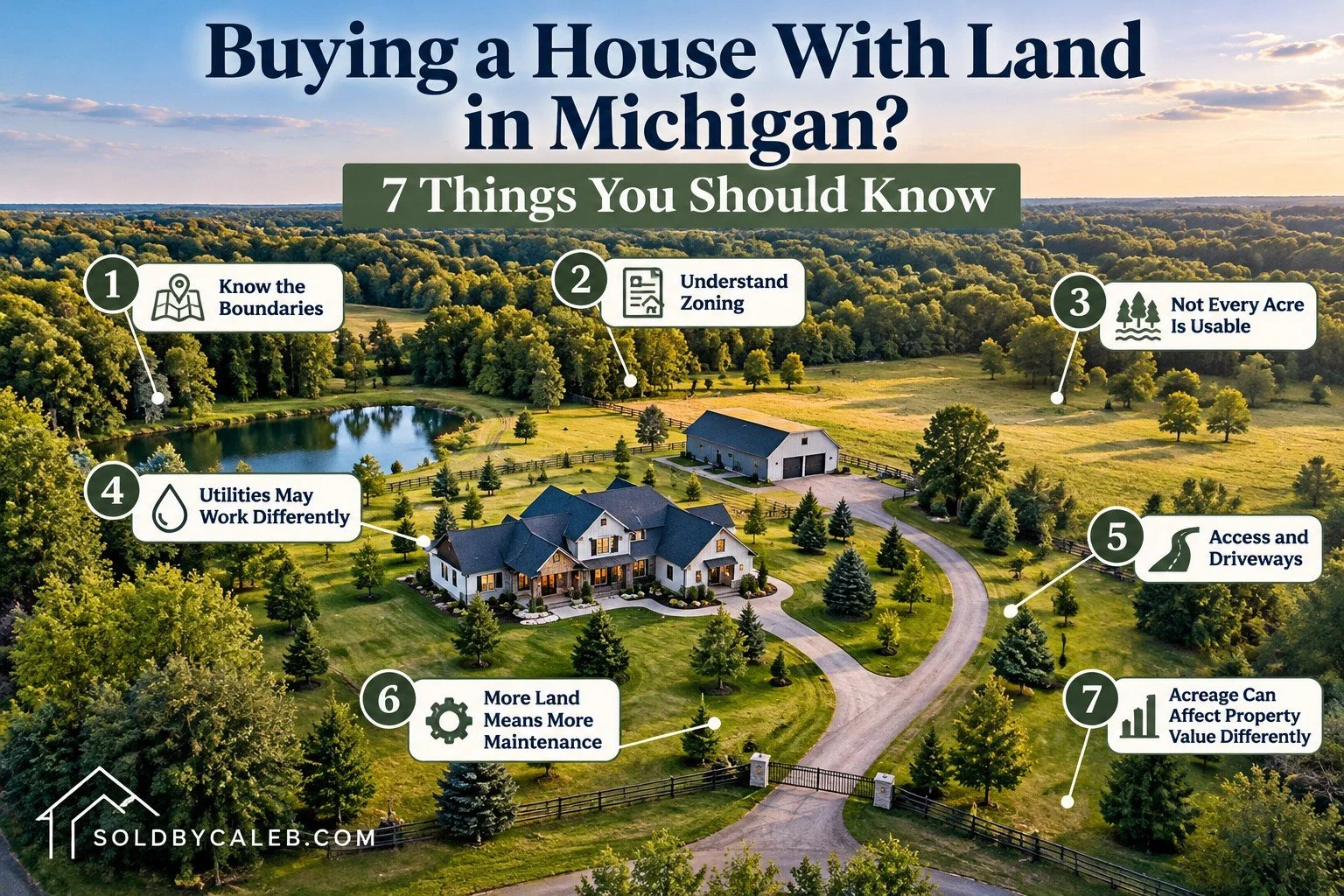
Here are seven things worth understanding before you buy.
1. Know Exactly How Much Land You're Buying
A listing might advertise five acres, but where does that acreage begin and end?
Property boundaries aren't always obvious, especially on wooded or undeveloped land. Existing fences, tree lines and mowed areas don't necessarily follow the legal property lines.
Things to investigate:
Survey: Is a current boundary survey available? Would a new one be appropriate?
Parcel identification: Does the property consist of one tax parcel or several?
Easements: Does someone else have the legal right to cross or use part of the land?
Encroachments: Are fences, buildings or driveways crossing property boundaries?
Legal access: Does every parcel have appropriate access to a public road?
A survey can be particularly important when you're planning to build a fence, add an outbuilding or make improvements near a property line.
2. Understand What You Can Do With the Property
One of the biggest attractions of owning acreage is having room to do more.
But owning ten acres doesn't necessarily mean you can do anything you want with them.
Local zoning ordinances determine many of the permitted uses of a property.
Common questions include:
Can I build a pole barn, detached garage or workshop?
Can I keep horses, chickens or other animals?
Can I operate a business from the property?
Can I build a second residence or guesthouse?
Could I divide the land into additional parcels someday?
Are there restrictions on building size, height or location?
Zoning regulations can vary considerably between townships, even within the same county.
Before purchasing, contact the municipality's zoning or planning department to confirm whether your intended use is permitted. If a project is essential to your decision, investigate the required approvals before removing your purchase contingencies.
3. Not Every Acre Is Usable
A ten-acre property may look enormous on paper, but that doesn't mean all ten acres can be developed, cleared or improved.
Some land may include wetlands, flood-prone areas, steep slopes or soil conditions that limit its use.
Pay attention to:
Wetlands: Certain activities, including filling, draining or construction, may require permits.
Floodplains: Flood exposure can affect construction plans and insurance considerations.
Topography: Steep or uneven terrain may make building more expensive.
Soil conditions: Soil type and drainage can influence foundations, driveways and septic systems.
Wooded areas: Clearing trees may require additional investigation or approvals.
Michigan's Department of Environment, Great Lakes, and Energy provides a Wetlands Map Viewer that can help identify areas where wetlands may exist.
The maps are a starting point, not a final determination. Site-specific professional evaluation may be necessary.
The important distinction is between total acreage and land that can actually serve your intended purpose.
4. Utilities May Work Differently
Many acreage properties, particularly outside developed subdivisions, rely on private systems rather than municipal services.
That isn't necessarily a disadvantage, but it changes what you'll need to inspect and maintain.
Common differences include:
Well water: Private wells require maintenance and appropriate water testing.
Septic systems: Septic tanks and drain fields need inspection, maintenance and sufficient space.
Propane: Some homes use propane instead of natural gas.
Internet: High-speed internet and cellular service may be limited in certain rural locations.
Electricity: Supplying power to distant buildings can require substantial additional work.
For private wells, Michigan EGLE recommends regular inspection and annual testing for coliform bacteria and nitrates. Learn more through the state's drinking water testing resources.
If the property has a private septic system, there's more to investigate than simply checking whether the plumbing works. Tank condition, drainfield location, maintenance history and local inspection requirements all matter. Read my guide on buying a home with a septic system in Michigan for a closer look.
Ask about the location, age, condition and maintenance history of any private systems. Also find out whether utilities can accommodate future improvements.
5. Pay Attention to Road Access and Driveways
A long, tree-lined driveway can be one of the most appealing features of a country property.
It can also become an unexpected expense.
Questions worth asking:
Is the property accessed by a public or private road?
Who maintains and plows the road?
Is there a recorded road maintenance agreement?
Is the driveway shared with another property?
Could emergency vehicles reach the home year-round?
Are there culverts, drainage problems or areas that need resurfacing?
A private road may be maintained by the property owners rather than the county or township.
If several owners share a road, understand how maintenance responsibilities and expenses are divided.
6. More Land Means More Maintenance
A larger property can provide tremendous enjoyment, but it also brings responsibilities beyond maintaining the house.
Depending on the property, those might include:
Mowing fields or maintaining trails
Trimming or removing trees
Maintaining fences and gates
Clearing snow from long driveways
Managing drainage and erosion
Maintaining ponds, ditches or culverts
Purchasing or hiring equipment for property upkeep
A wooded five-acre property may require a completely different maintenance approach than five acres of open lawn.
Consider how you'll actually use the land and what it will cost to maintain it.
Don't forget about property taxes when calculating the cost of owning acreage. In Michigan, the seller's current property tax bill may not reflect what you'll pay after purchasing. Understanding how taxable value can change after a transfer is an important part of budgeting. Learn more in my article, Michigan Property Tax Uncapping Explained.
Sometimes the right property isn't the one with the most acreage. It's the one that provides the space you want without creating more work than you're prepared to take on.
7. Acreage Can Affect Property Value Differently
When comparing homes with land, the number of acres is only part of the equation.
Five acres in one location may be more desirable than ten acres somewhere else.
Factors that can influence value include:
Location and proximity to employment, schools and amenities
Road frontage and access
Privacy and surrounding properties
Usable land versus restricted land
Existing outbuildings and improvements
Utility availability
Potential for additional development
Demand for similar properties in the local market
A beautiful home on acreage may appeal to a different group of buyers than a similar home in a subdivision.
That can make selecting appropriate comparable sales especially important when evaluating the asking price or preparing to sell.
While the land deserves special attention, don't overlook the house itself. Acreage properties sometimes include older homes, additions, outbuildings and mechanical systems that warrant closer evaluation. My guide on what to inspect before buying an older Michigan home covers additional areas worth investigating.
Questions to Ask Before Buying a Home With Acreage
Before moving forward, consider asking:
Is there a recent survey?
What is the property's zoning classification?
Are there easements, deed restrictions or conservation agreements?
Are there wetlands or floodplain areas?
What private utilities and systems serve the home?
Who maintains the road and driveway?
Are existing outbuildings properly permitted?
What improvements would I like to make in the future?
Have those plans been discussed with the appropriate authorities?
What will the property cost to maintain each year?
Finding the Right Property for You
Buying a house with land can be an incredible opportunity to enjoy more privacy, room for hobbies, outdoor recreation and a different way of living.
The key is understanding that you're buying more than the house.
You're buying the land, its possibilities, its limitations and the responsibilities that come with owning it.
With experience in both Michigan real estate and residential construction, I can help buyers evaluate not only the home itself, but also the practical considerations that come with the property..