

When shopping for a home, most buyers pay attention to the floor plan, condition, location, and backyard. But there's another detail that can make a surprising difference in everyday life: which direction the house faces.
In Michigan, the sun's position changes throughout the year. The direction a home faces can affect natural light, room temperatures, gardening, outdoor activities, and even how quickly snow melts on the driveway.
And here's the interesting part: every direction has its advantages.
North, South, East, or West: What's the Difference?
When someone describes a house as north-facing, they're generally referring to the direction the front of the house faces.
That means a north-facing home has a south-facing backyard. An east-facing home has a west-facing backyard.
Here's how the four directions compare:
North-Facing Home
Front yard: More shade and indirect sunlight.
Backyard: More southern sunlight.
South-Facing Home
Front yard: More direct sunlight, especially in winter.
Backyard: More shade and indirect sunlight.
East-Facing Home
Front yard: Morning sunshine.
Backyard: Afternoon and evening sunshine.
West-Facing Home
Front yard: Afternoon and evening sunshine.
Backyard: Morning sunshine.
These are general patterns. Trees, neighboring buildings, roof overhangs, and window placement can change how much sunlight reaches a property.
Try our interactive Home Direction Explorer below. Choose which direction the house faces and watch how sunlight changes around the property throughout the day.
Follow the Sun
Choose which direction the front of the house faces. See where morning, midday, and evening sunlight falls.
Simplified overhead illustration, not a property-specific sun study. Actual sun angle, trees, nearby buildings, and window placement affect results. In Michigan the sun is generally in the southern sky at midday.
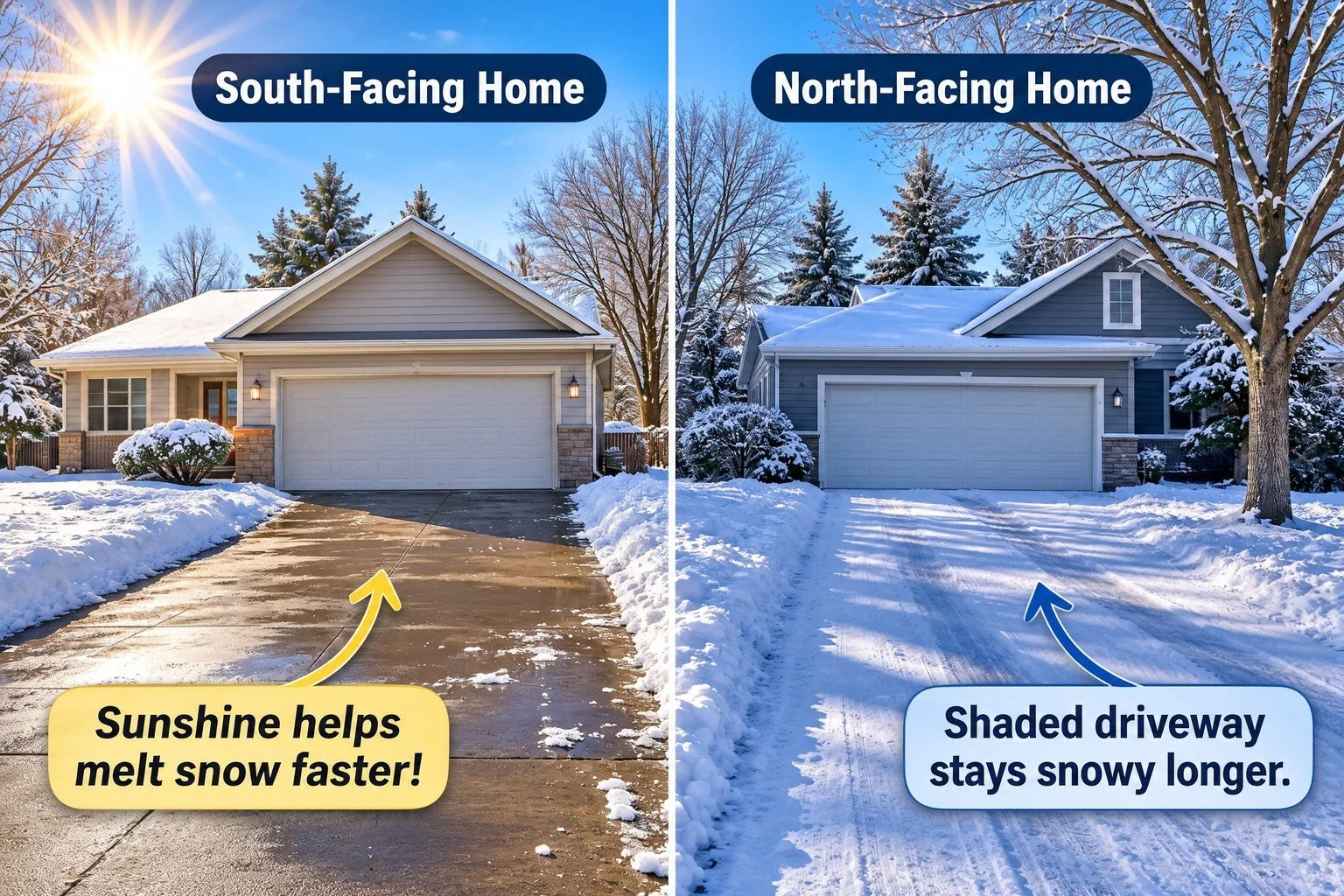
Michigan's Winter Sun Favors the South
During Michigan winters, the sun travels relatively low across the southern sky. That means south-facing windows can receive valuable direct sunlight, helping brighten rooms and provide some natural warmth.
This can also make a difference outdoors. A south-facing driveway that receives direct sunshine may clear snow and ice faster than a shaded north-facing driveway.
The amount of melting still depends on temperature, pavement conditions, trees, and nearby buildings. But if you've ever noticed one side of a street clearing before the other, sunlight exposure may be part of the reason.
Your Windows Can Work With the Sun
A home can use sunlight for more than lighting. Properly positioned windows can also contribute to heating and cooling efficiency.
This is part of what's called passive solar design. South-facing windows can capture winter sunlight, while roof overhangs and exterior shading can help reduce unwanted summer heat.
East-facing windows bring in morning light, while west-facing windows receive stronger afternoon sunshine. That western exposure can be especially noticeable during hot summer evenings.
Window efficiency, insulation, and shading all matter. A well-designed home can be comfortable and energy-efficient regardless of which direction its front door faces.
Learn more in our Real Estate Guides, including articles covering windows, insulation, and home construction.
Your Backyard Has Its Own Sun Schedule
Imagine two identical houses with the same backyard patio.
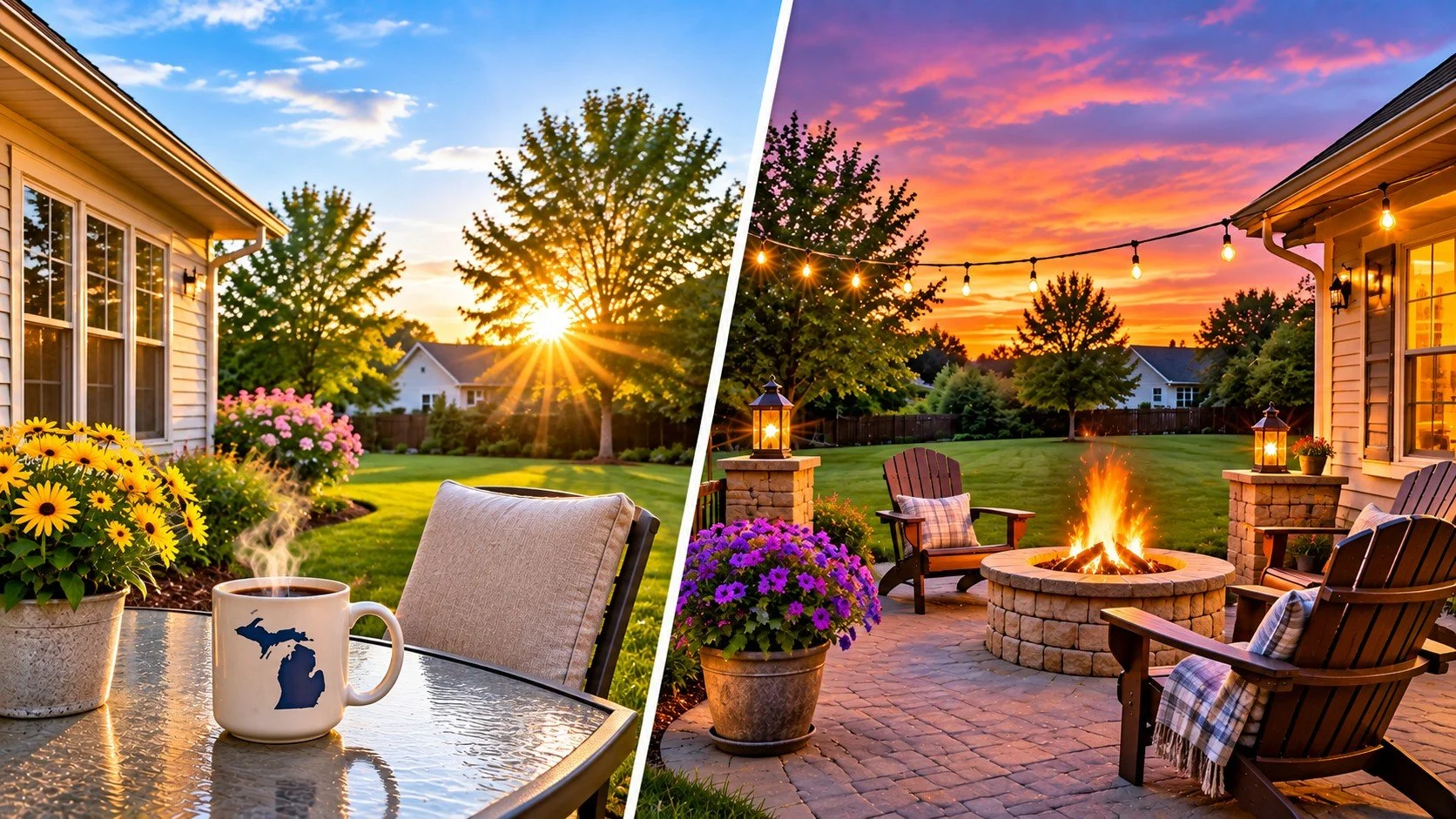
One homeowner enjoys sunshine with their morning coffee. The other gets a sunny backyard later in the day, perfect for an evening cookout.
The difference may simply be the direction the homes face.
North-facing home: The south-facing backyard can be a great place for sunshine, gardening, and outdoor activities.
South-facing home: The north-facing backyard may provide welcome shade during warmer afternoons.
East-facing home: The west-facing backyard gets afternoon and evening sunshine.
West-facing home: The east-facing backyard receives morning sunlight and generally becomes shadier later in the day.
Think about when you'll actually use the backyard. Someone who enjoys breakfast outdoors might prefer a different orientation than someone who entertains after work.
Gardening? Direction Matters
If you enjoy growing vegetables, flowers, or landscaping, sunlight exposure is worth considering.
Many popular vegetables, including tomatoes and peppers, grow best with at least six to eight hours of direct sunlight daily. A sunny south-facing backyard can offer excellent opportunities for garden beds, especially when trees and nearby buildings aren't blocking the light.
But shade has its advantages too.
Hostas, ferns, and other shade-tolerant plants can thrive in areas where full-sun plants struggle. A shaded backyard can become a comfortable garden retreat during Michigan's warmer months.
The important thing is matching your plants to the actual sunlight conditions, rather than choosing plants based on the home's facing direction alone.
Thinking About Solar Panels?
The direction of your roof can influence how much electricity solar panels generate.
In Michigan and throughout the Northern Hemisphere, unshaded south-facing roof surfaces generally receive favorable solar exposure. Southeast- and southwest-facing roof sections can also be suitable.
Here's something worth remembering: the direction your house faces and the direction your roof faces aren't necessarily the same thing.
A home may have several roof slopes facing different directions. Roof pitch, shading, available space, and the condition of the roofing materials all affect solar potential.
The U.S. Department of Energy's Homeowner's Guide to Solar explains what homeowners should consider before installing solar panels, including roof direction, shading, roof condition, and potential energy production.
Trees Can Change Everything
Two homes facing the same direction can have completely different sunlight conditions because of landscaping.
A mature deciduous tree on the west side of a house can provide shade during hot summer afternoons. When the leaves fall, more sunlight can reach the home during colder months.
Trees can also make patios more comfortable, reduce glare through windows, and create attractive outdoor spaces.
The U.S. Department of Energy's Consumer Guide to Home Landscaping explains how strategically placed trees and shrubs can provide summer shade, allow winter sunlight, and help reduce heating and cooling costs.
A well-positioned tree may be just as important to your comfort as the direction the house faces.
A Simple Trick for Your Next Home Showing
When visiting a house, identify north. Then look at the location of the driveway, backyard, patio, and major windows.
Think about where the sun will be in the morning, afternoon, and evening.
If you're visiting a property in the morning, remember that the backyard may look completely different later in the day. A shaded patio at 10 a.m. might receive direct sunlight by 4 p.m.
You can also use a sun-position app to preview how sunlight and shadows may change throughout the day.
A home's direction is one of those small details that can make a big difference in how you enjoy living there. Whether you prefer morning sunshine, afternoon shade, a productive garden, or a bright living room, understanding the sun's path can help you make a more informed decision.
For more practical information about buying, selling, and maintaining Michigan homes, explore the SoldByCaleb Real Estate Guides.